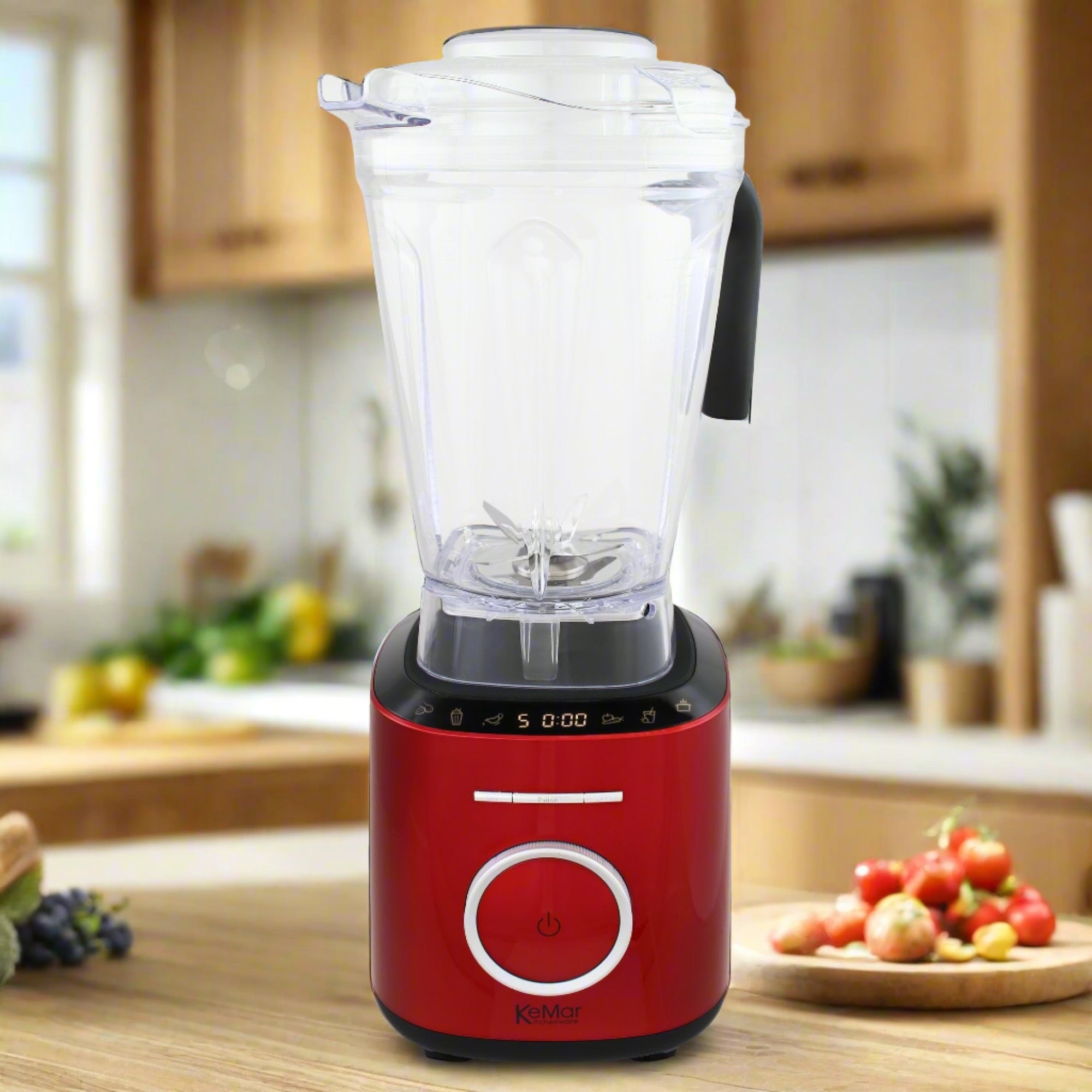
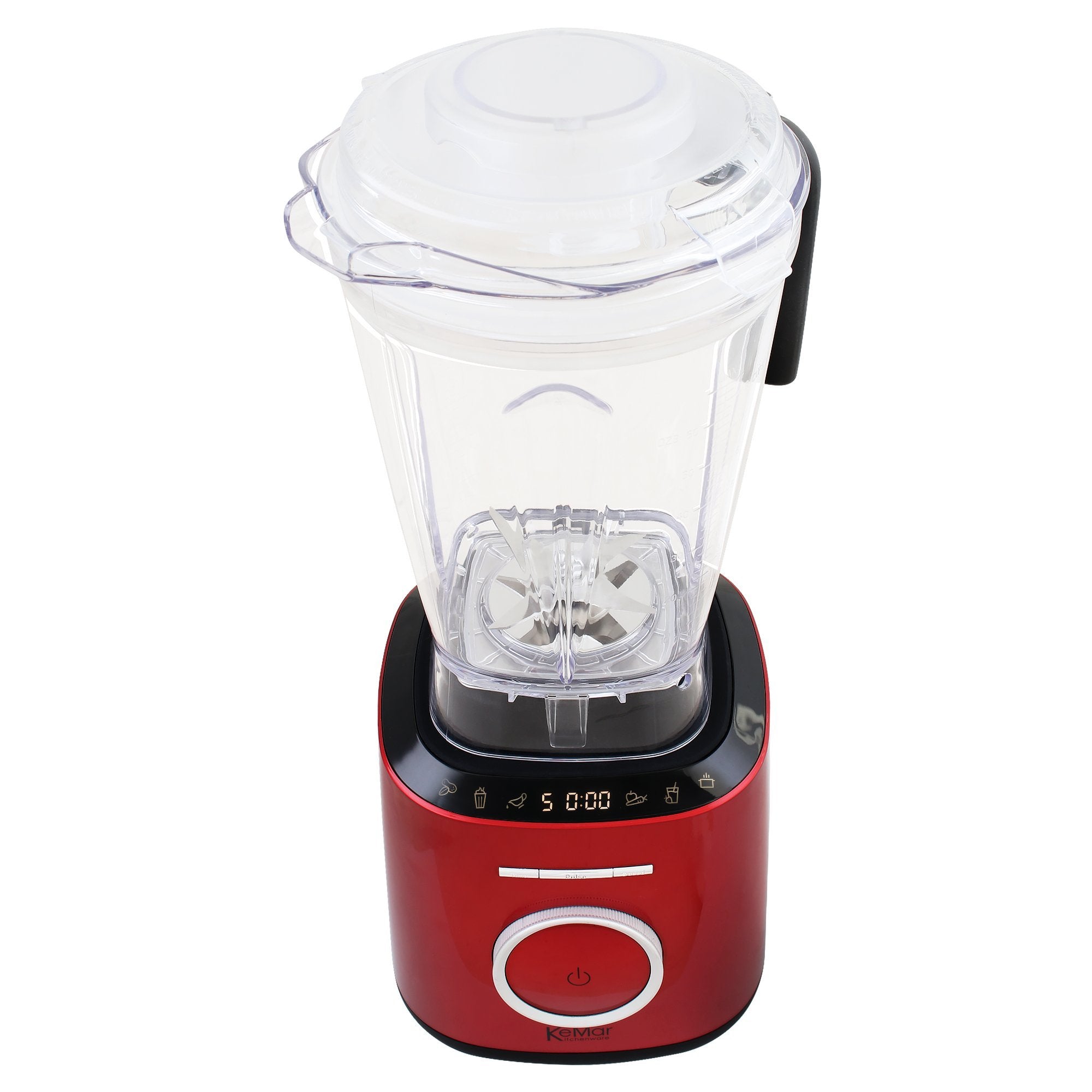
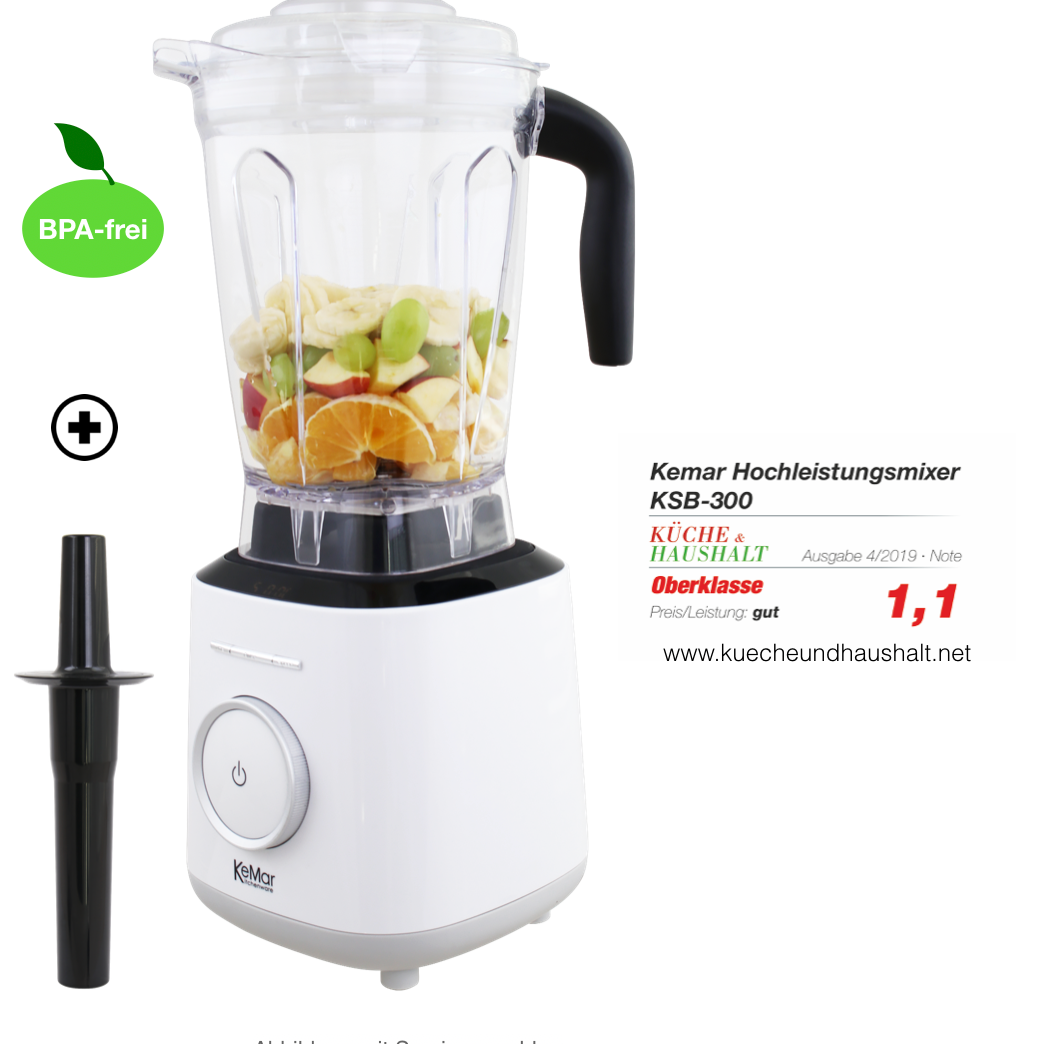
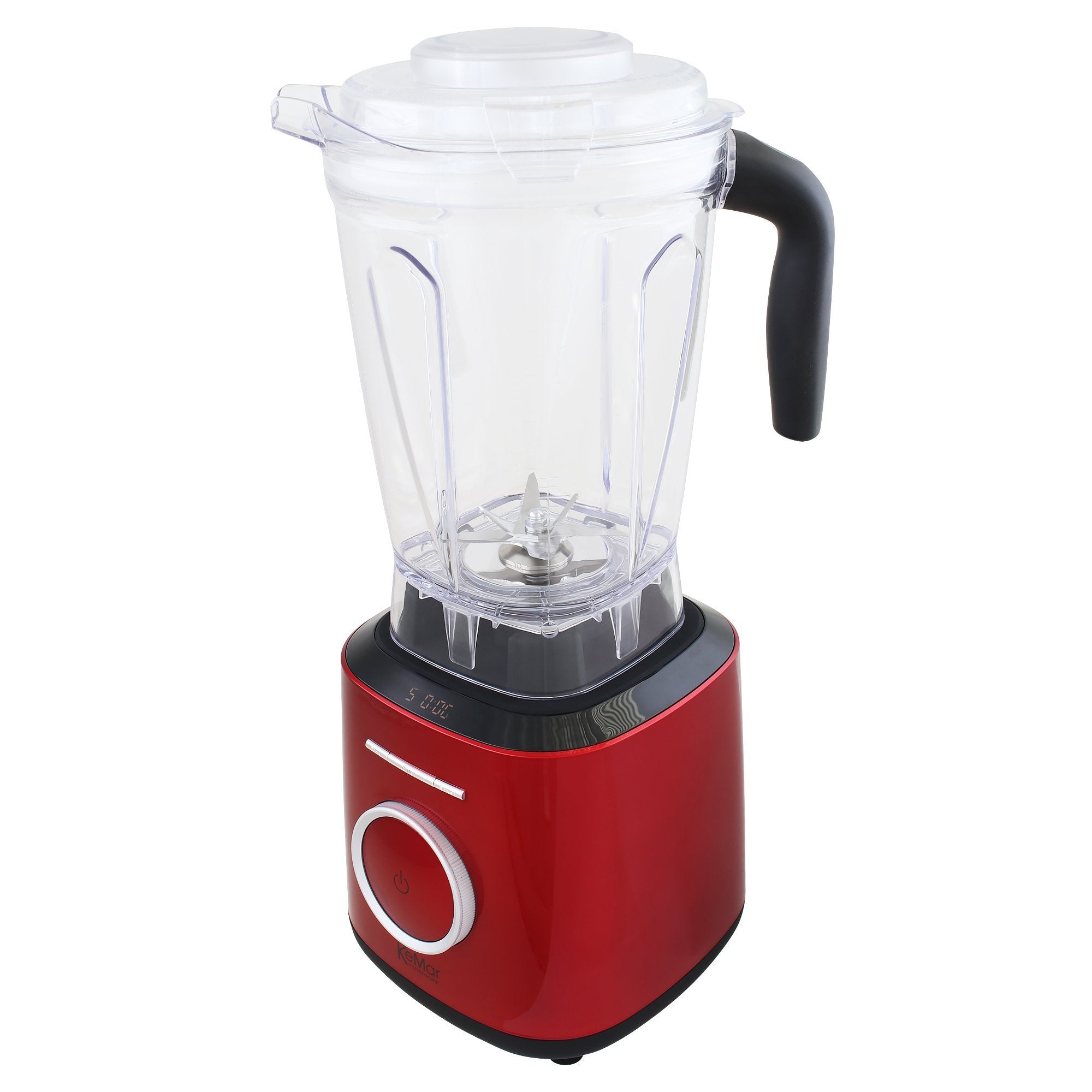
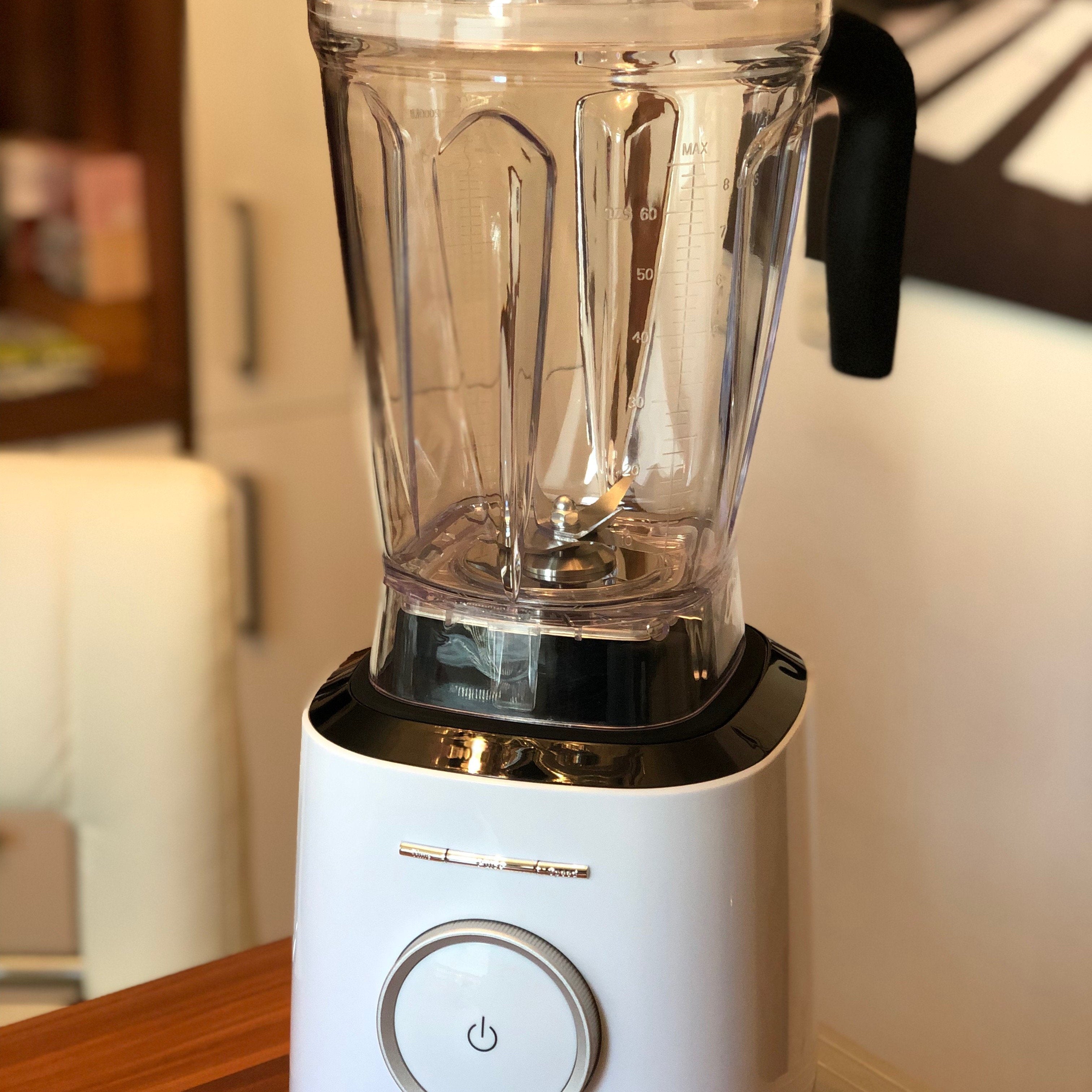
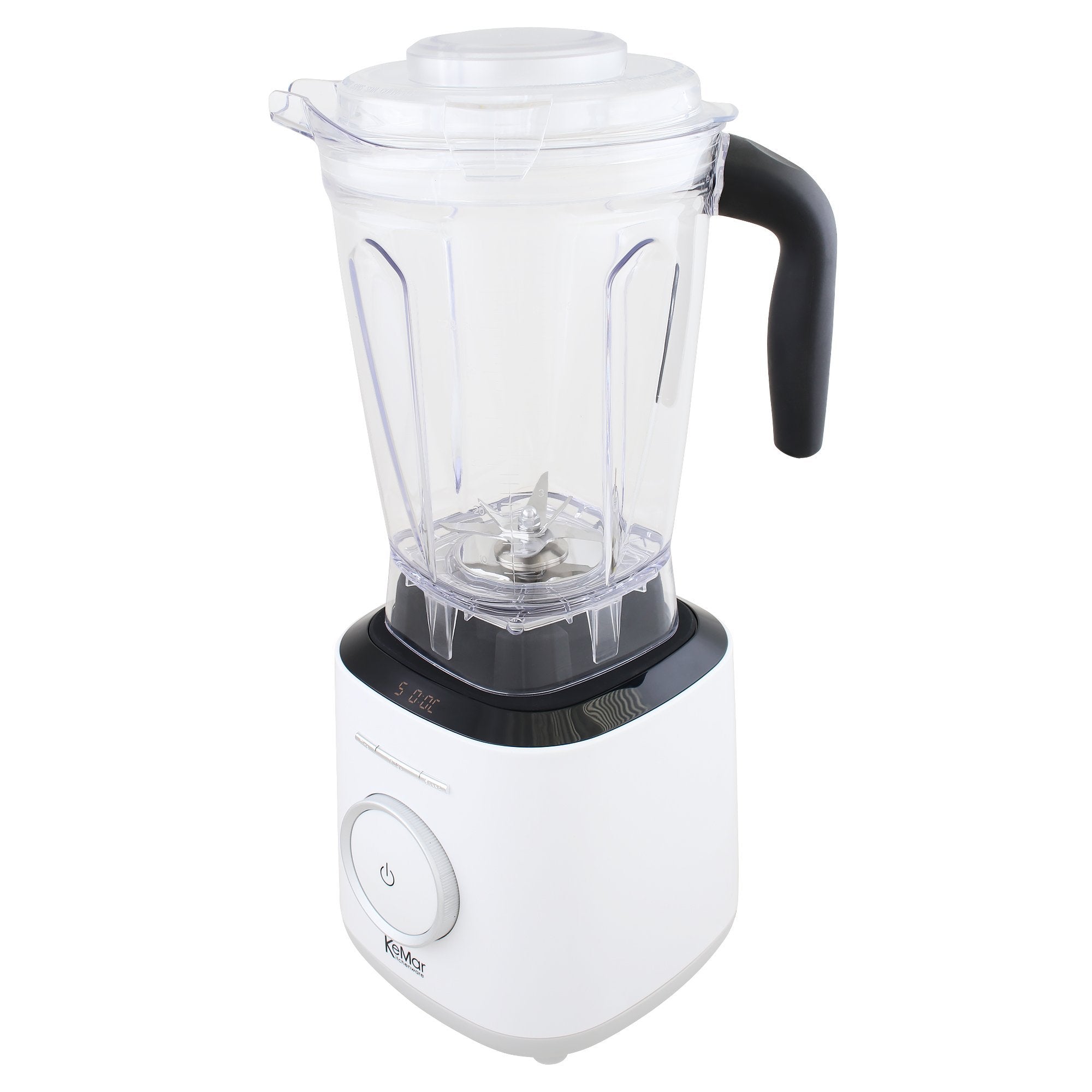
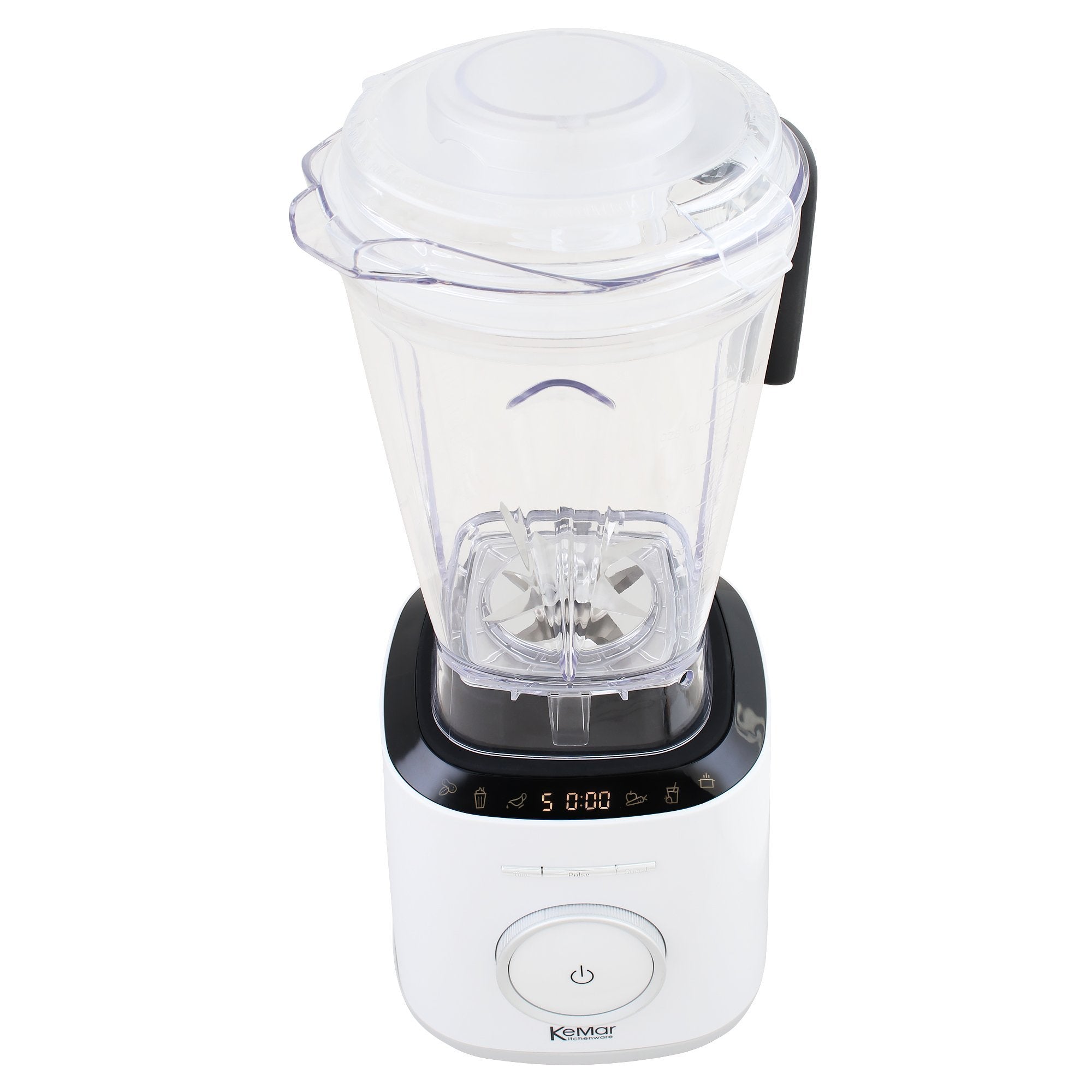
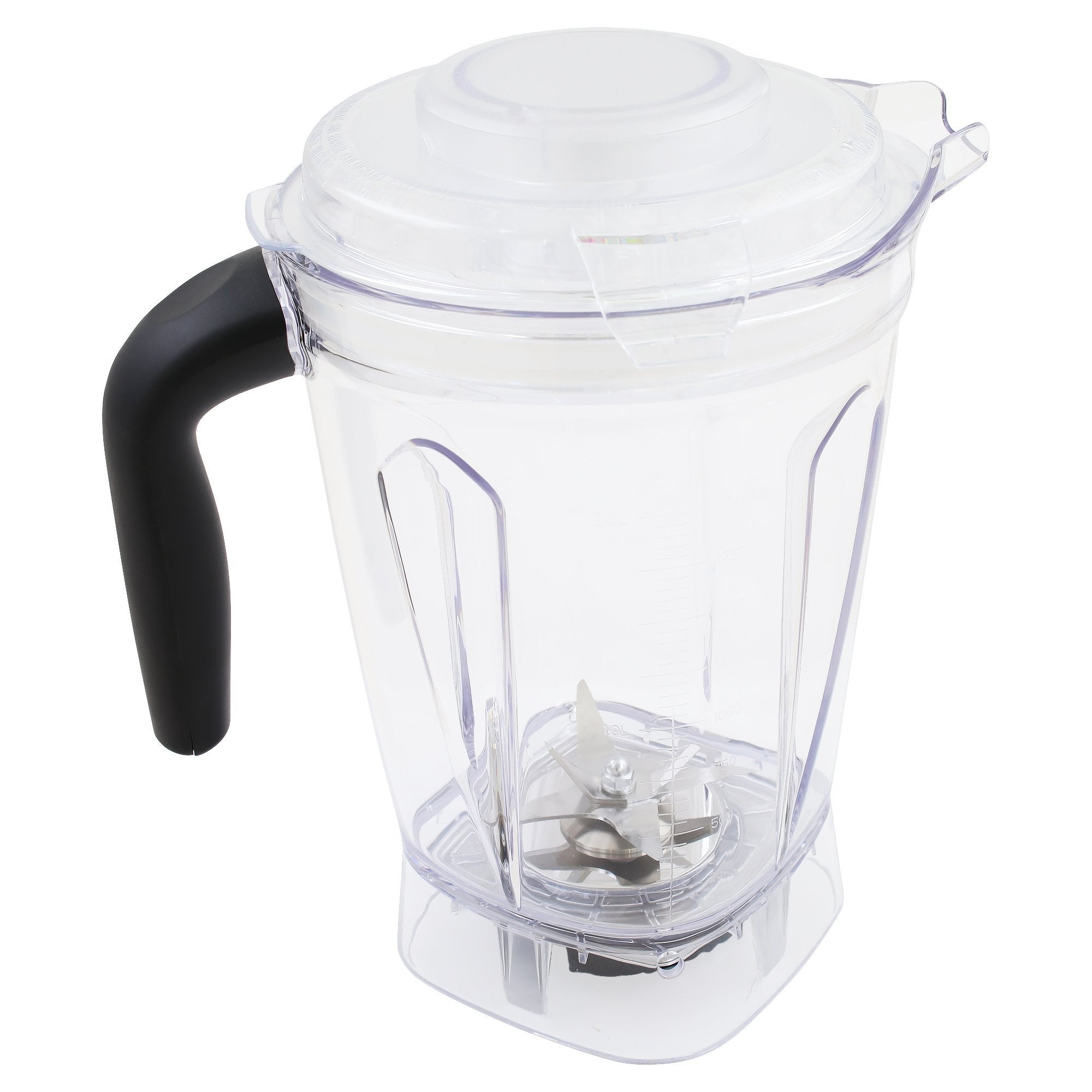
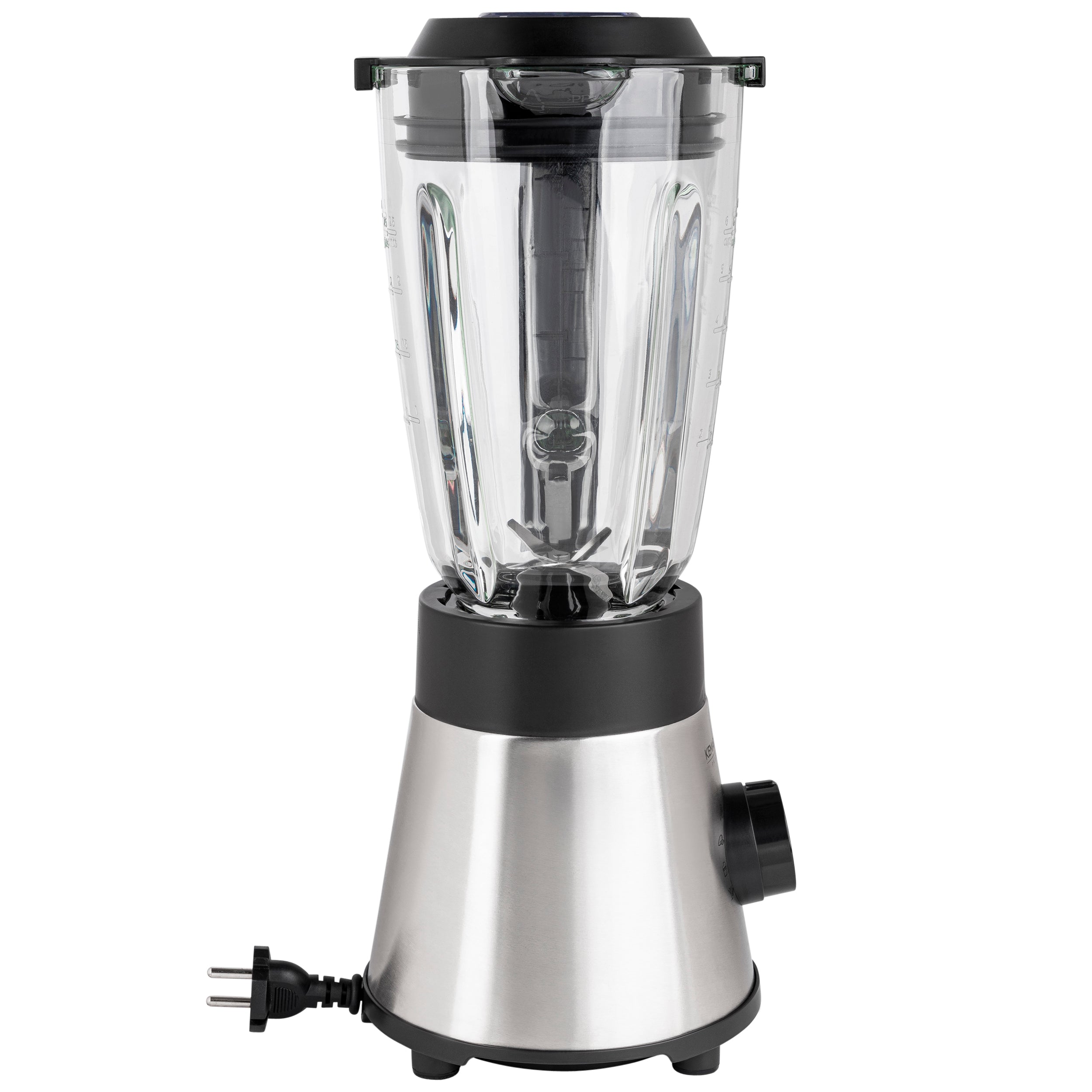
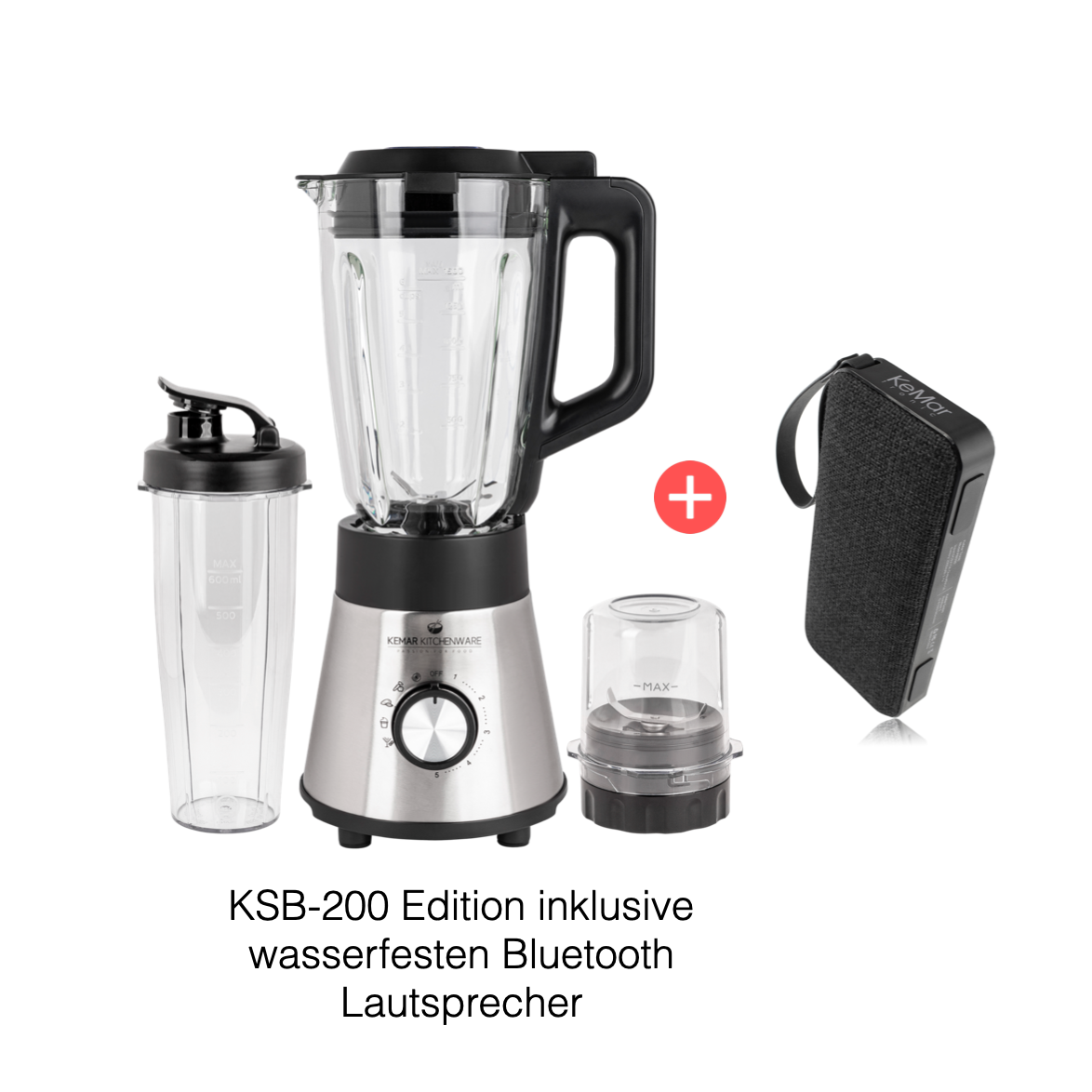
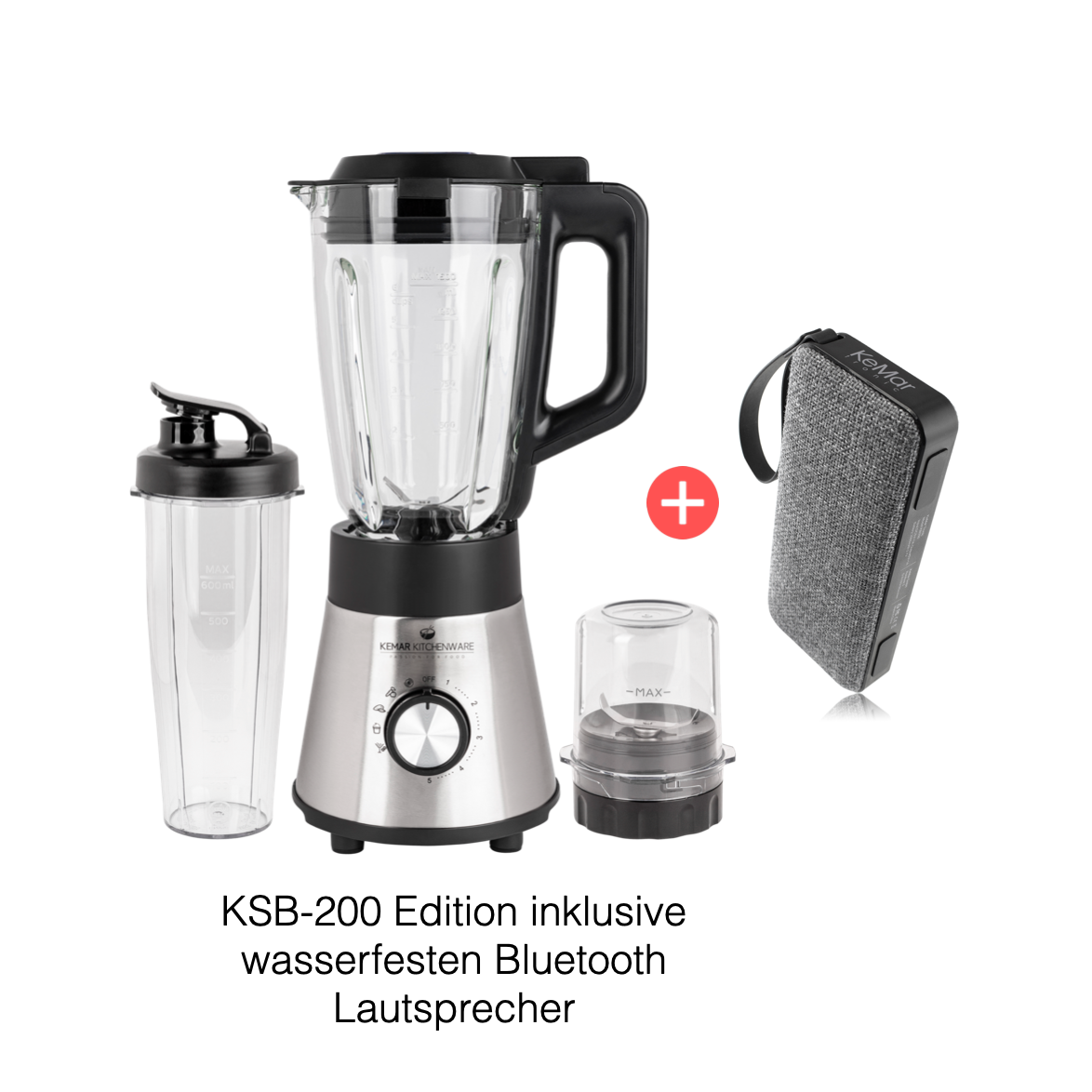
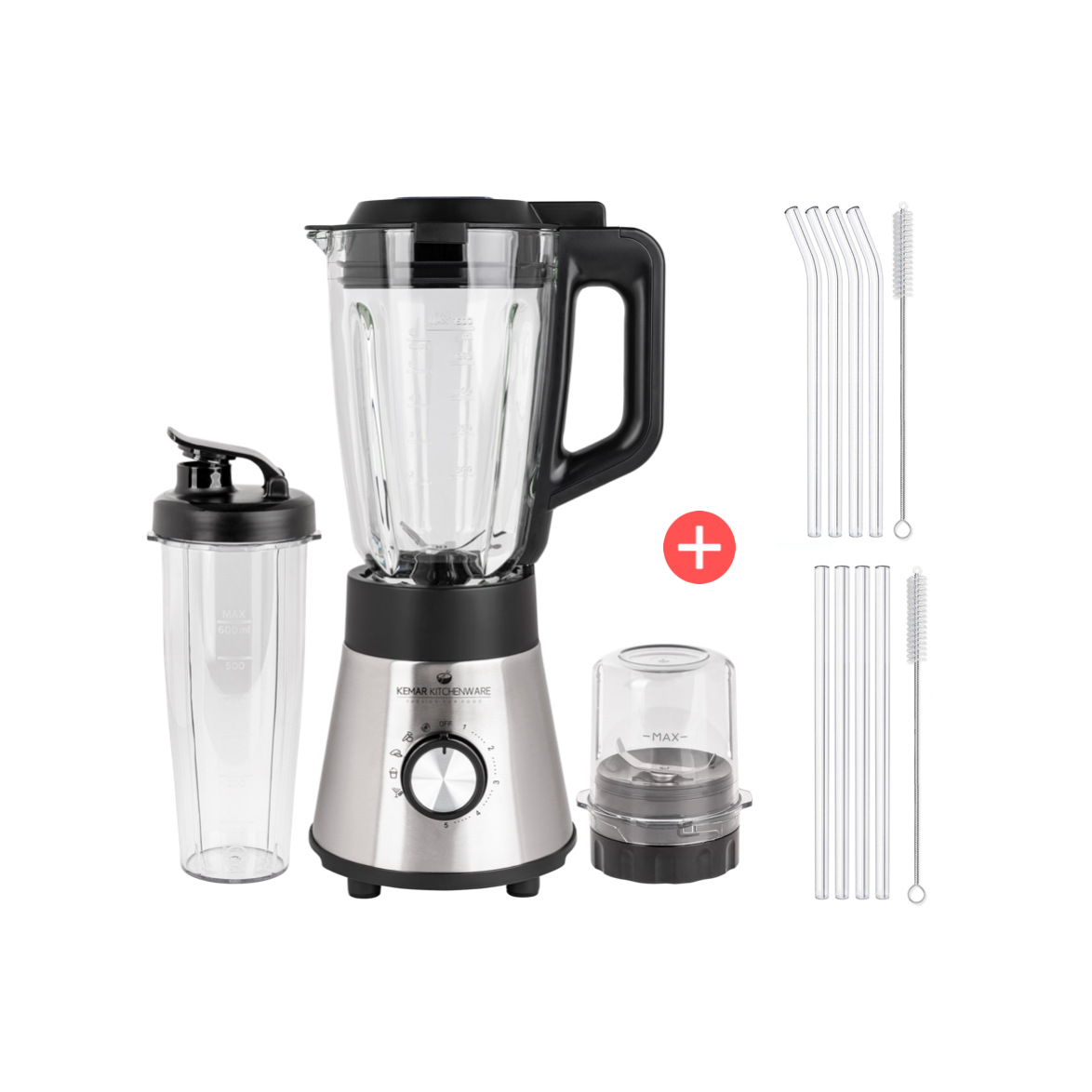
Why is the additional dry container important?
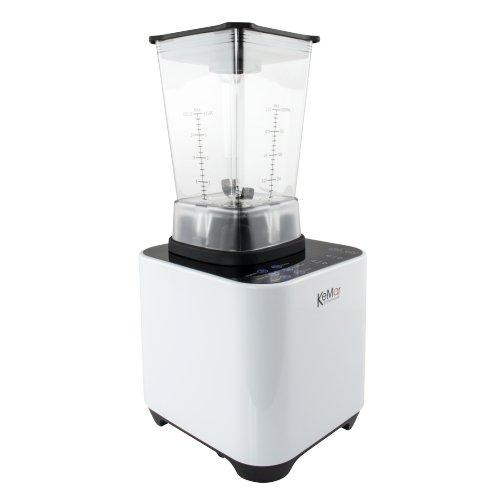
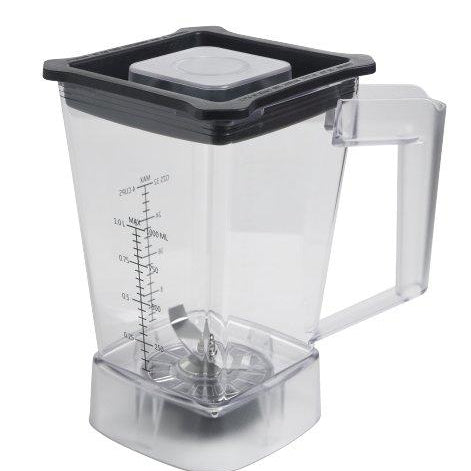
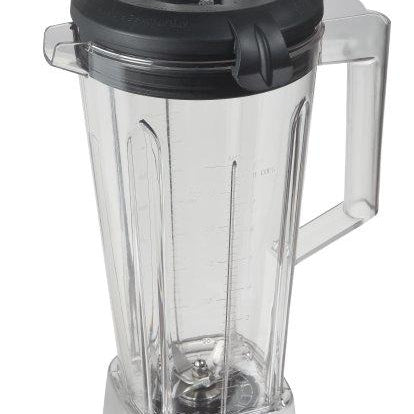
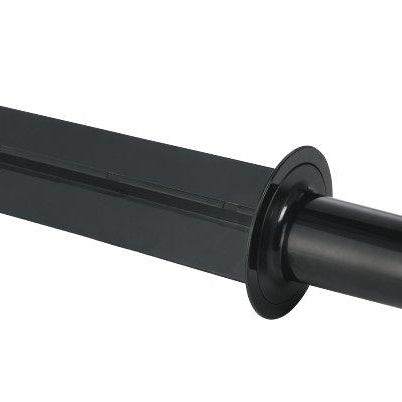
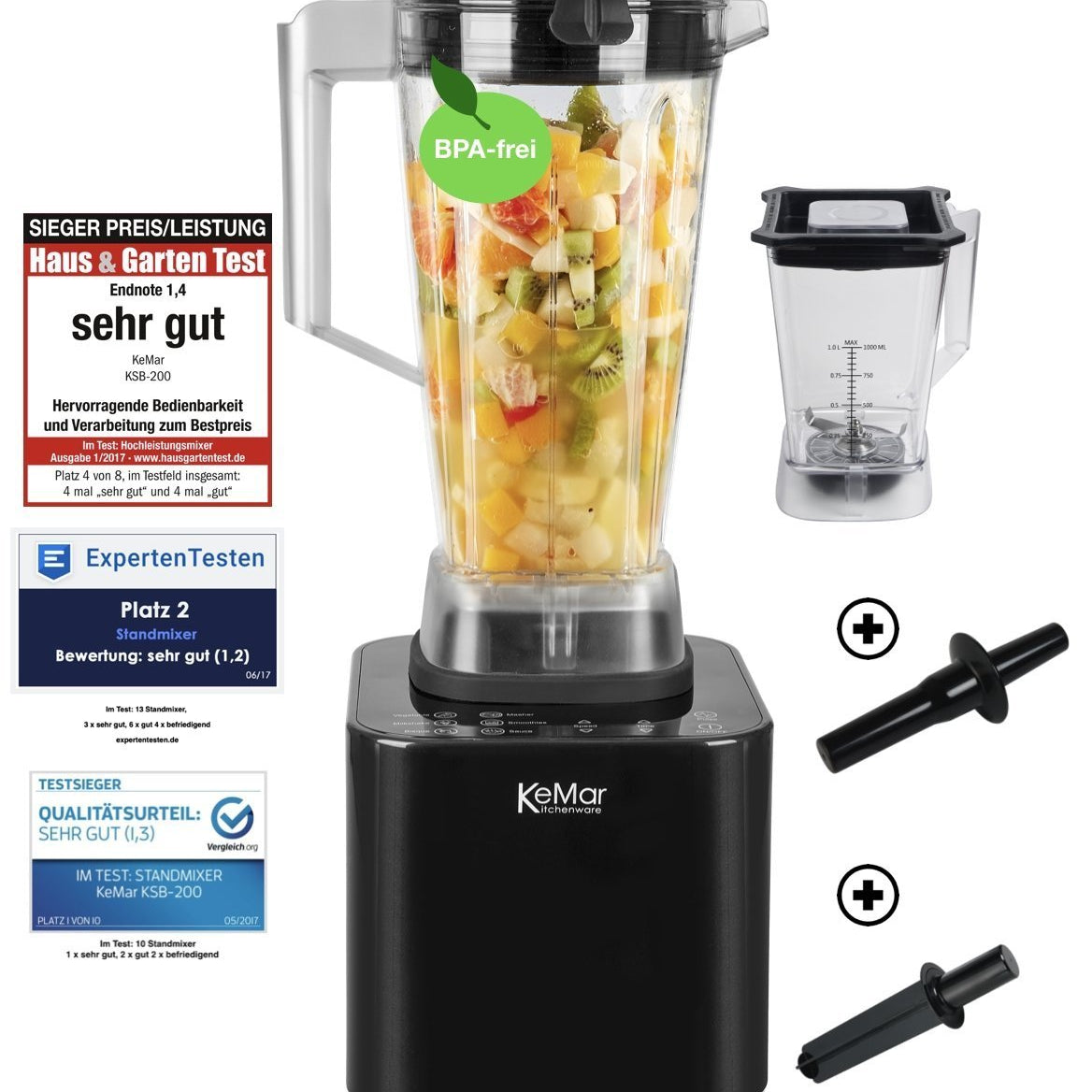
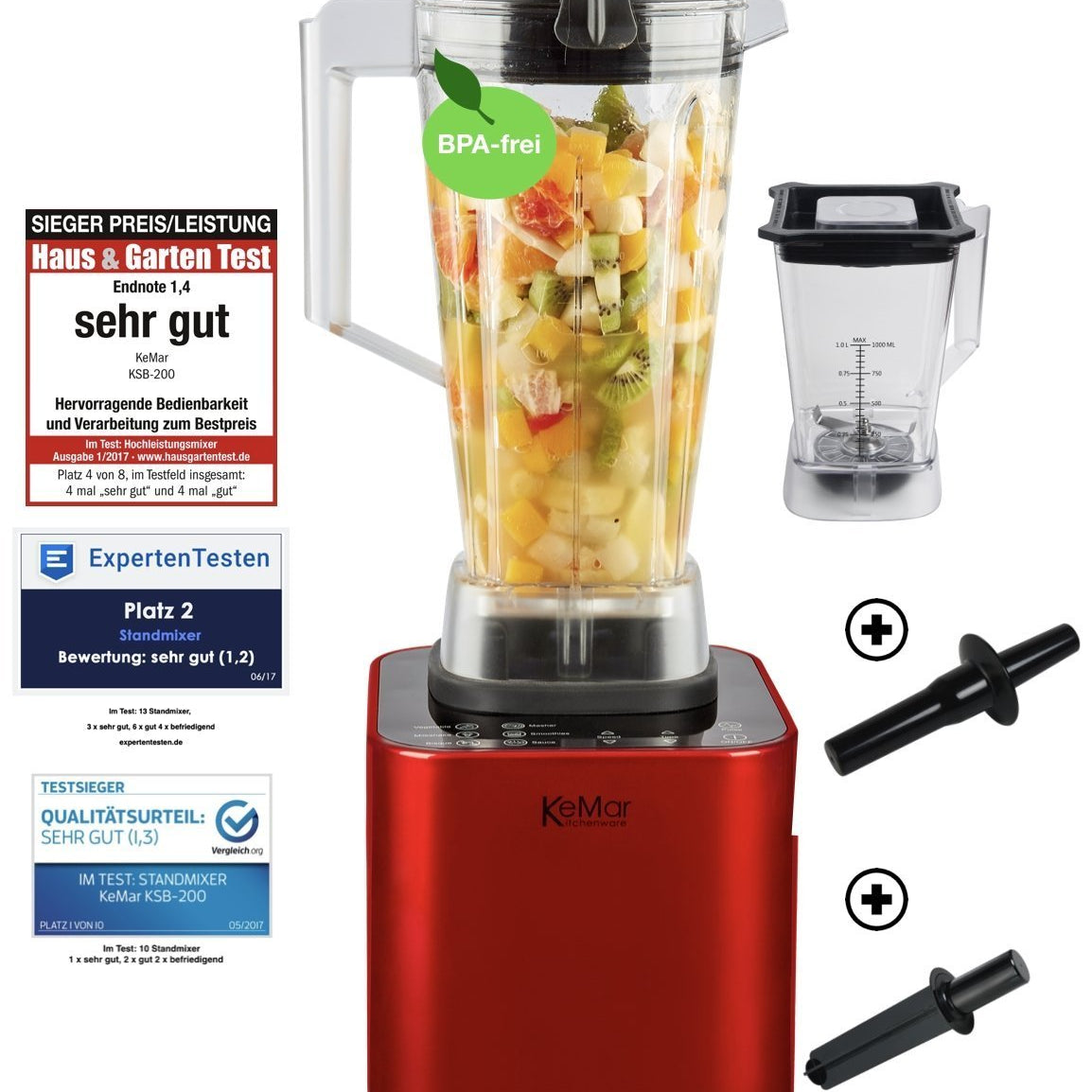
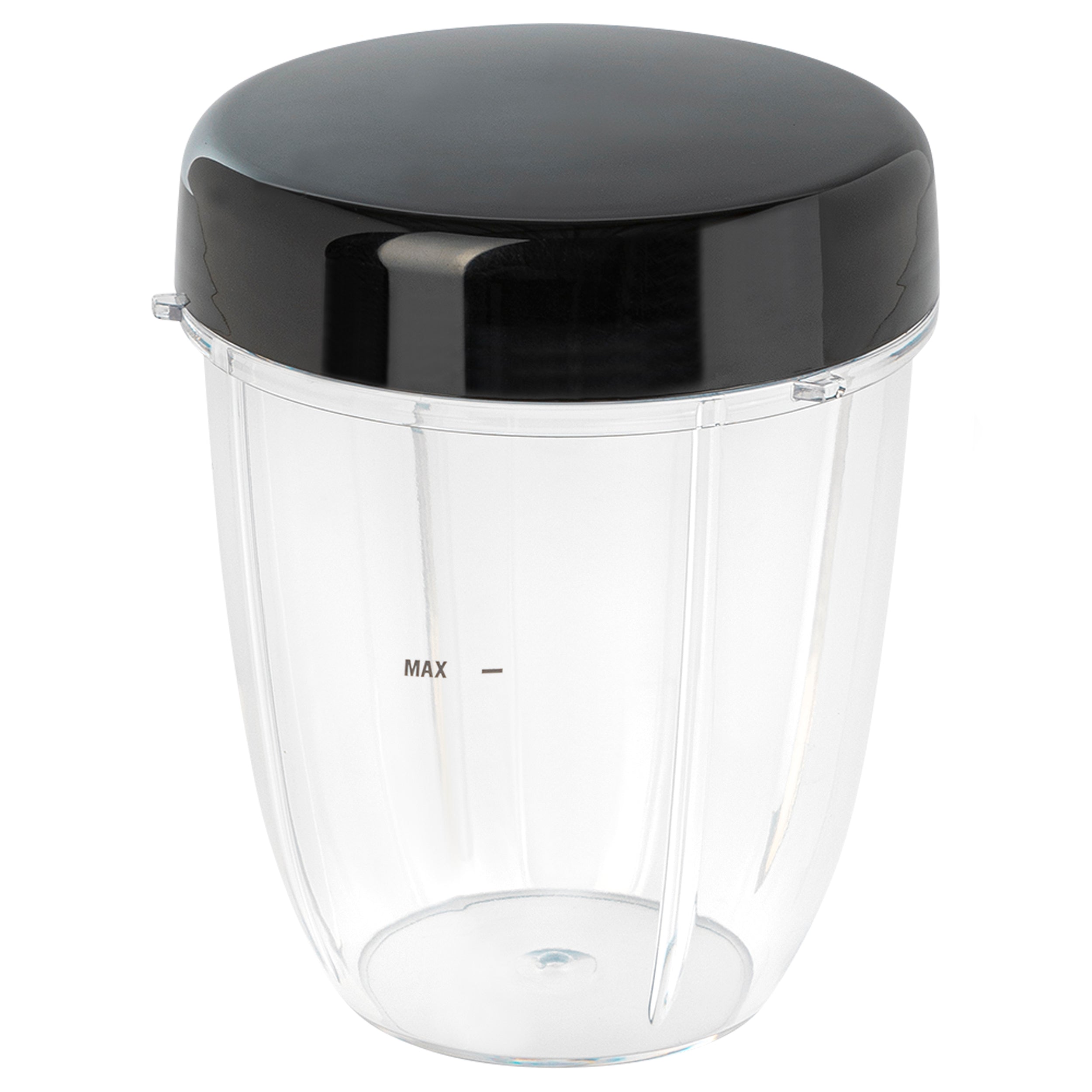
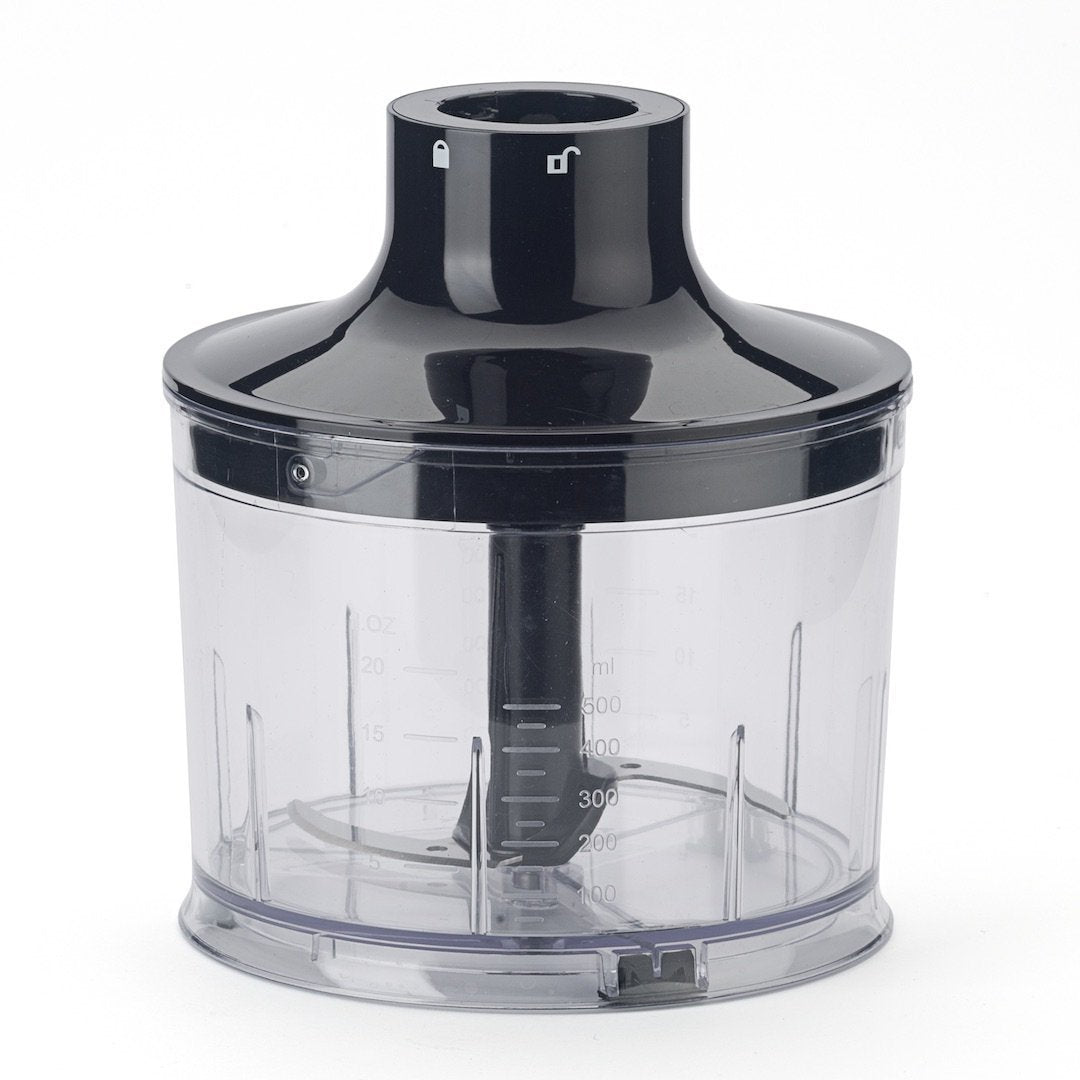
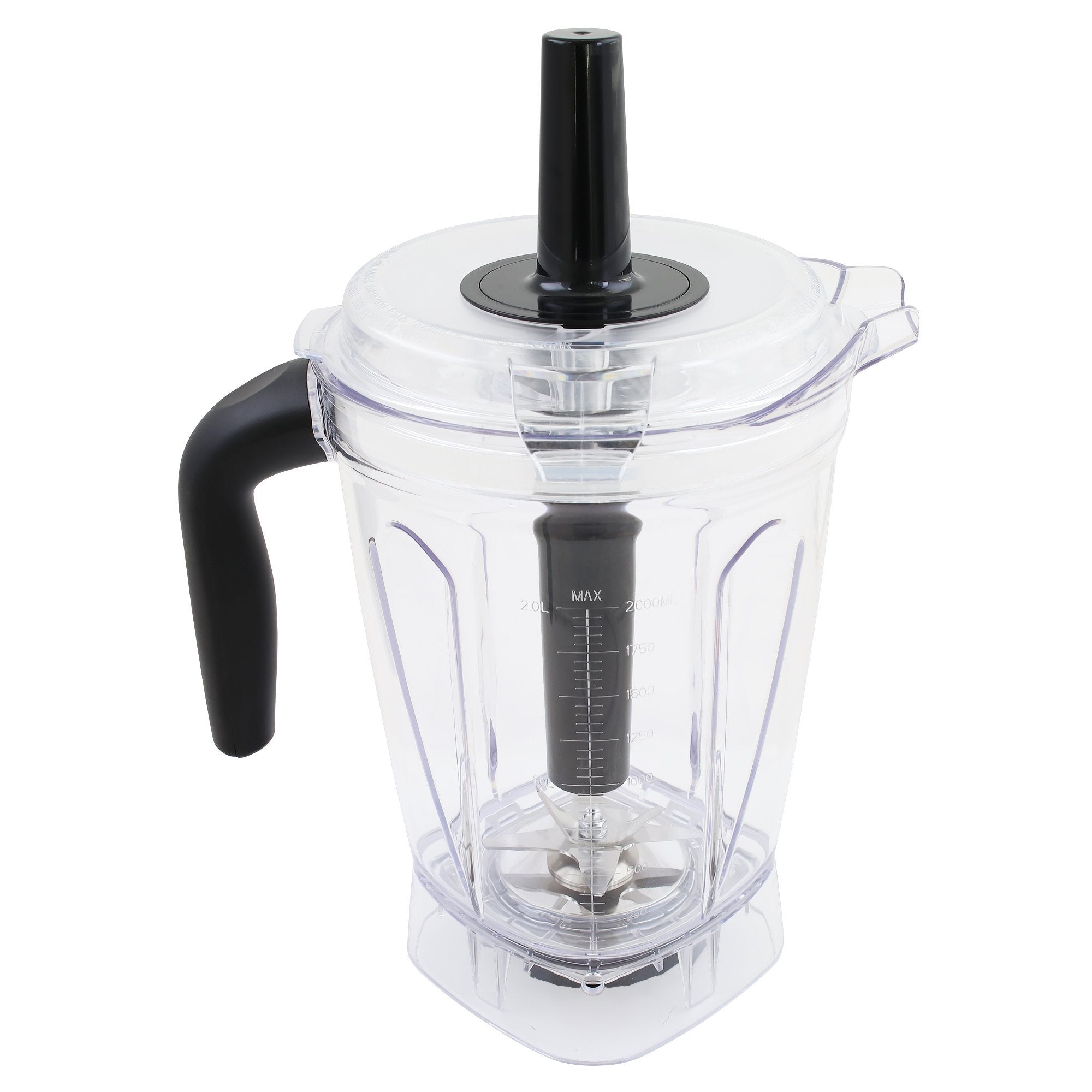
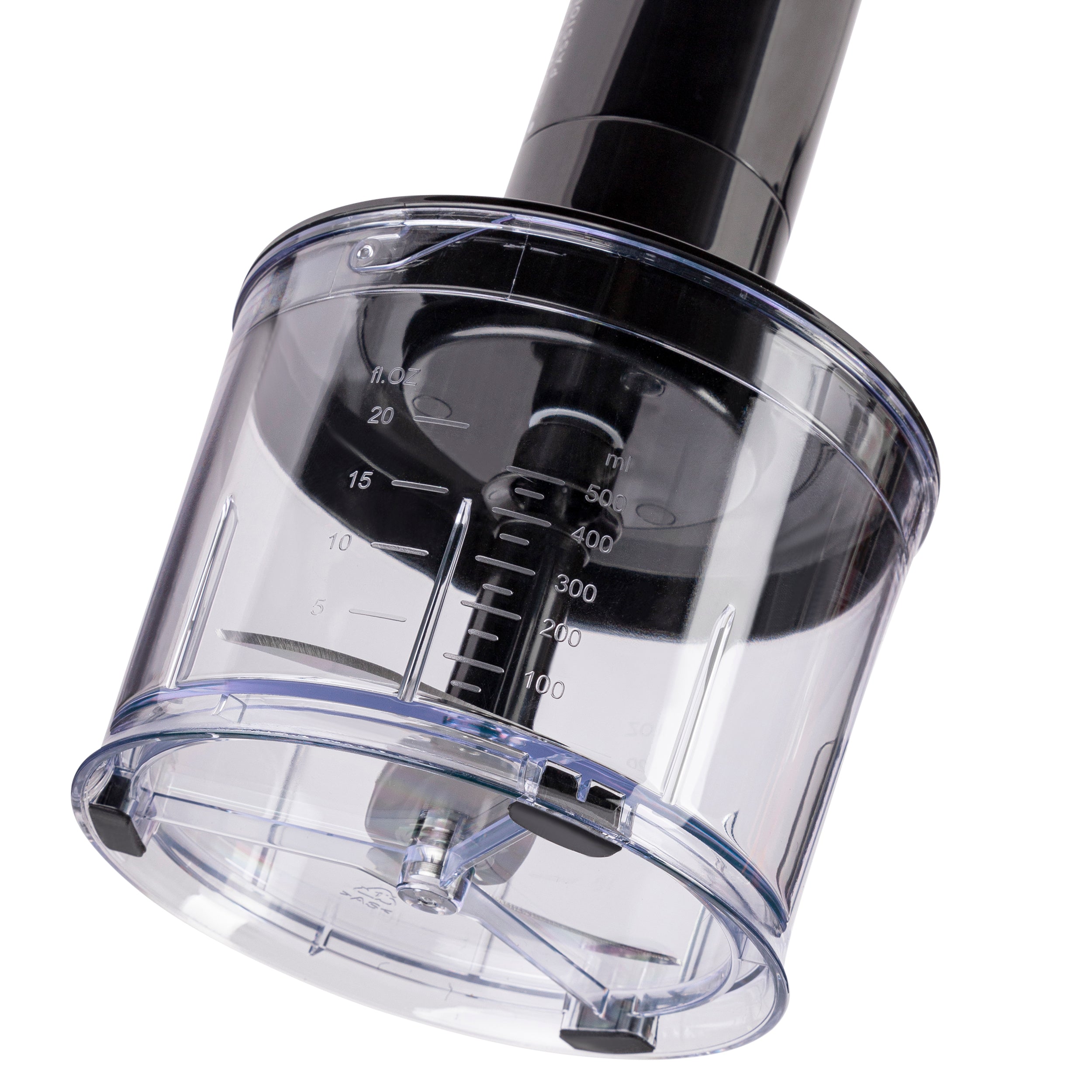
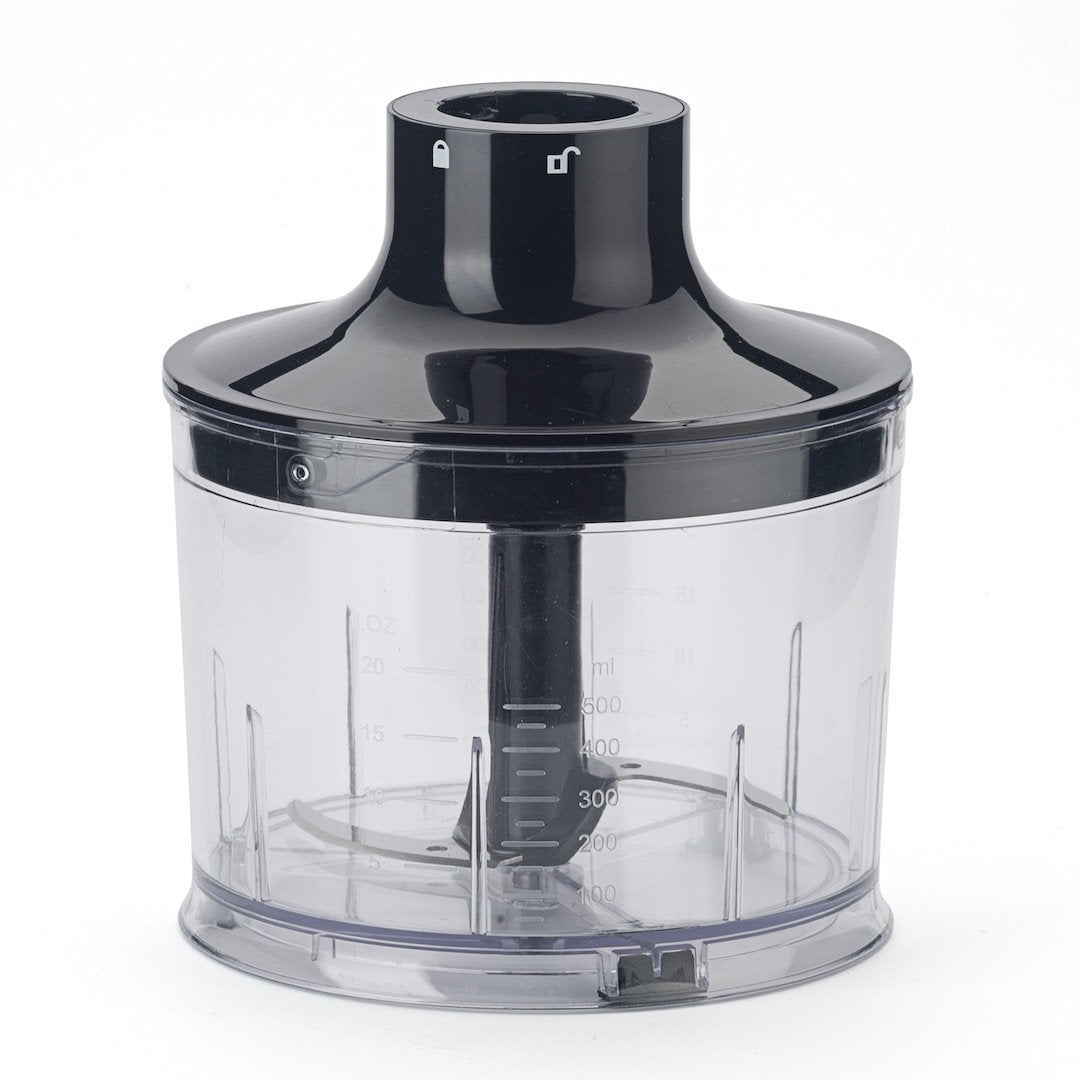
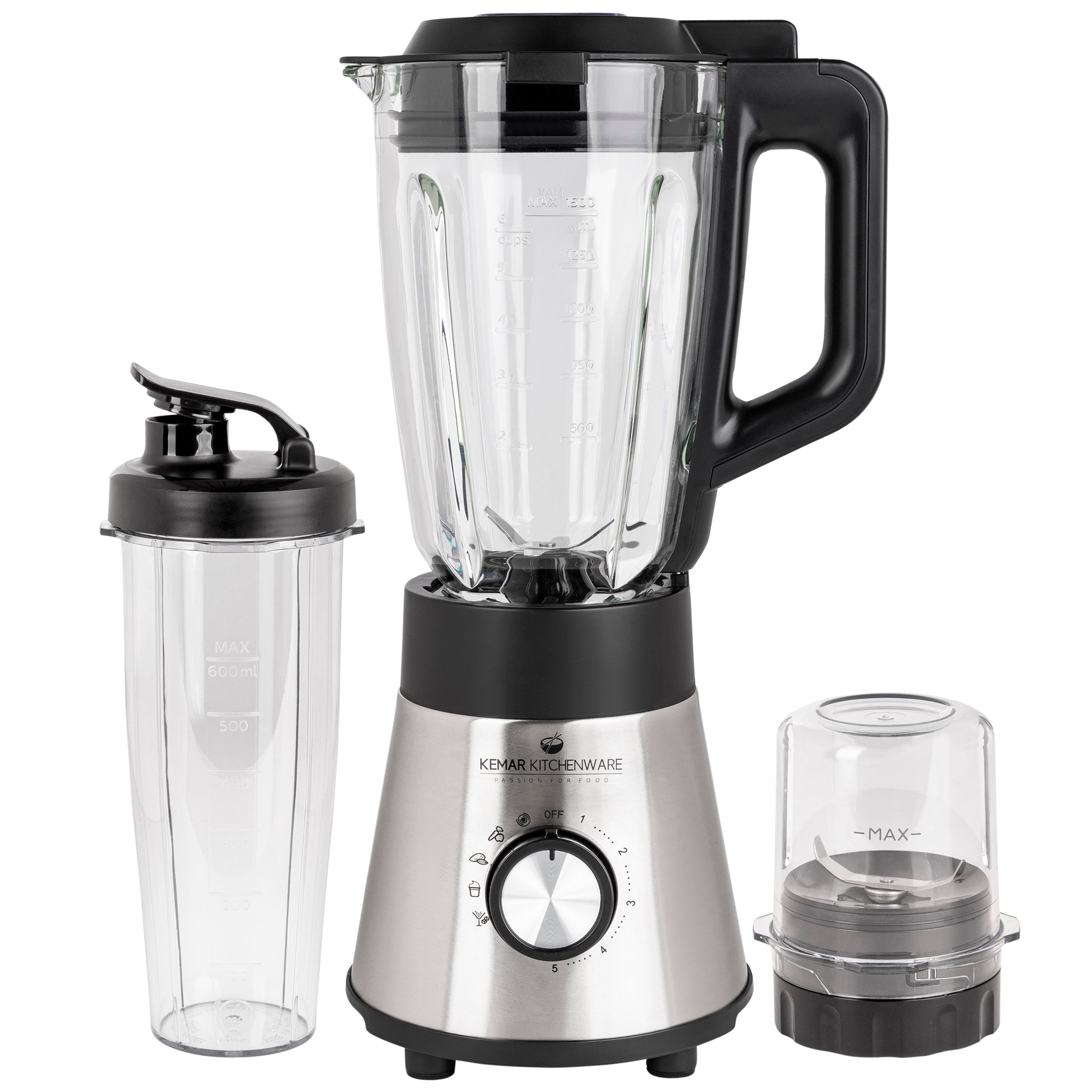
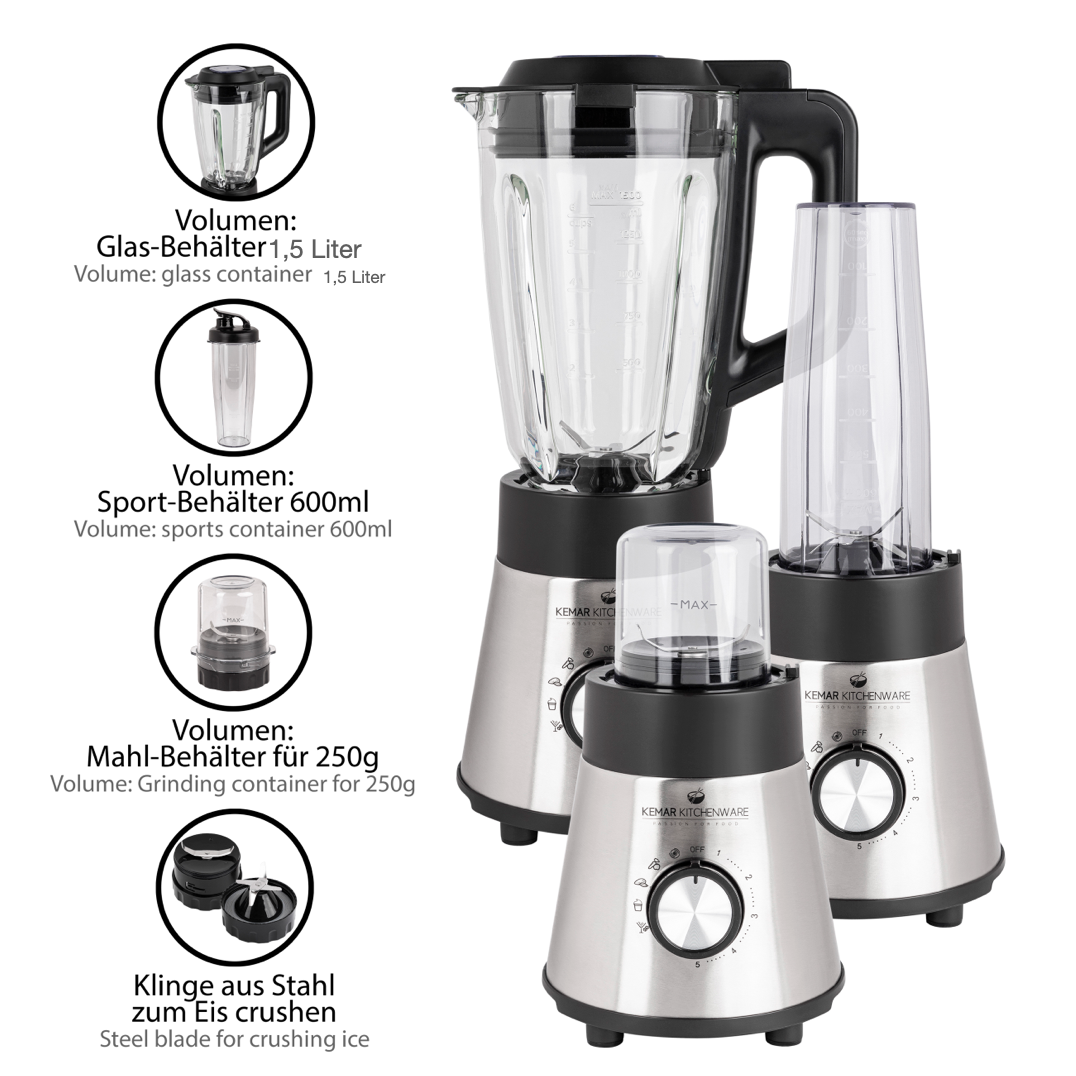
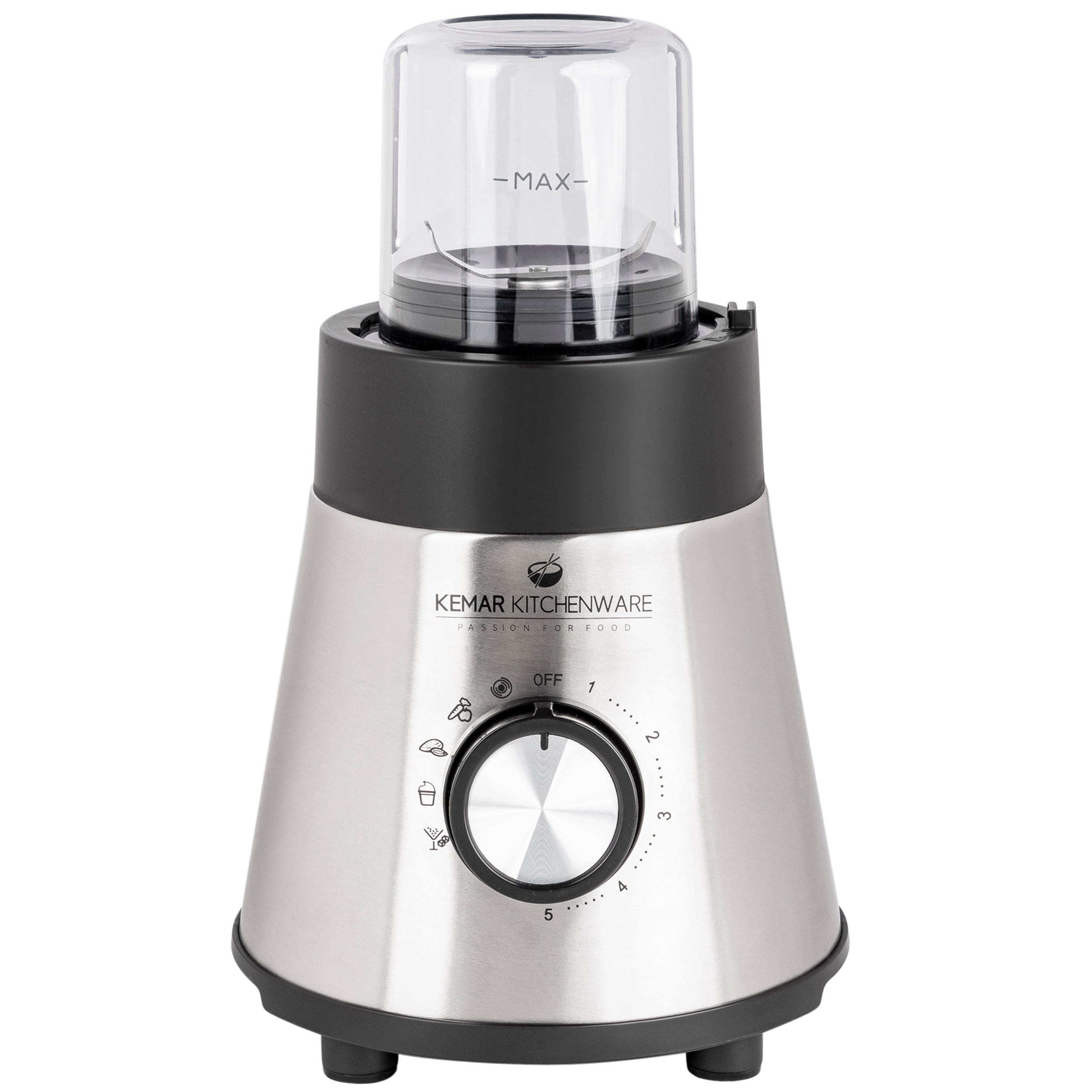
In a standard liquid container, dry grains (such as cereals or coffee) are often ground unevenly. The KSB-300's special 1.0L dry container ensures optimal air circulation during grinding, resulting in an extremely fine and homogeneous product.
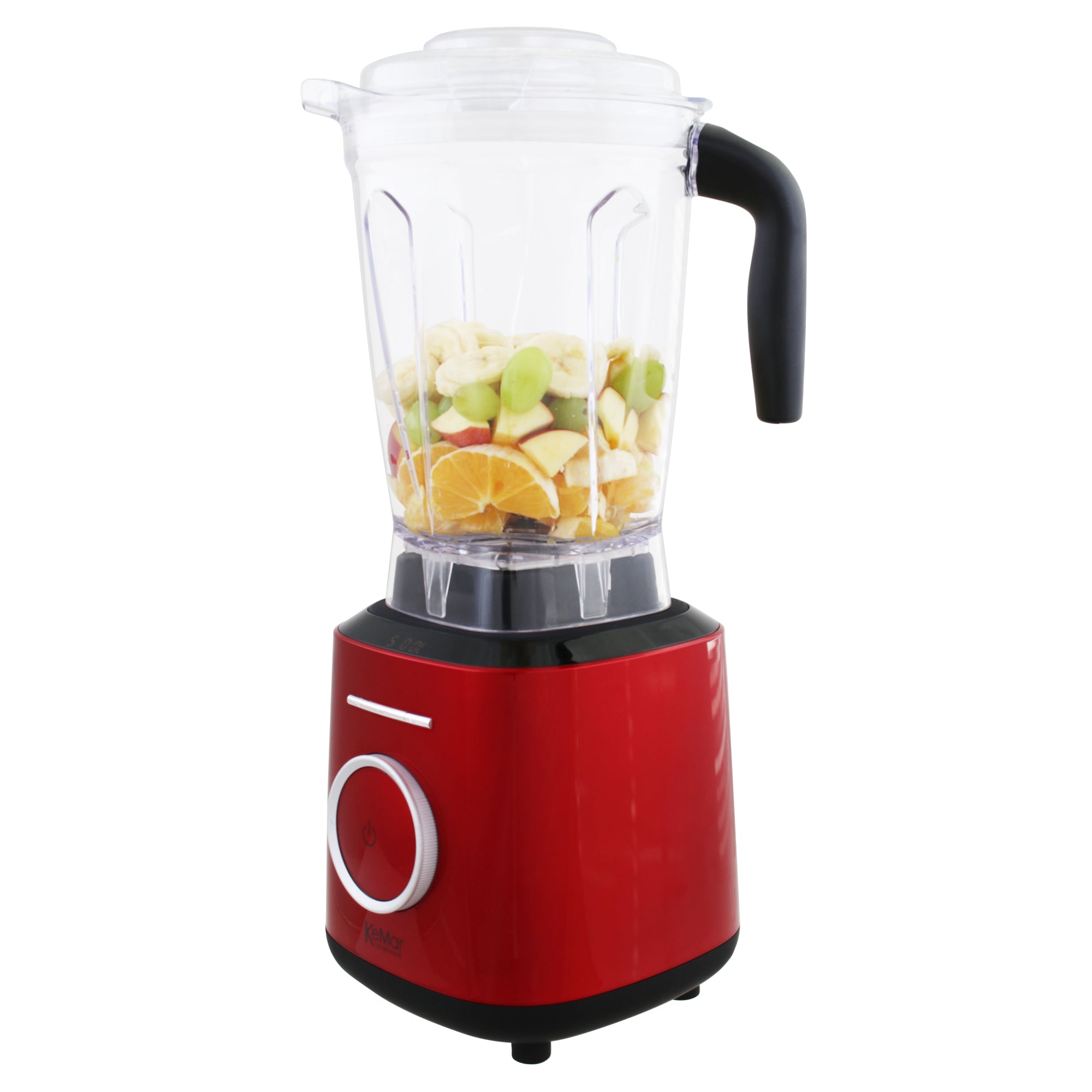
Can the KeMar KSB-300 cook soups?
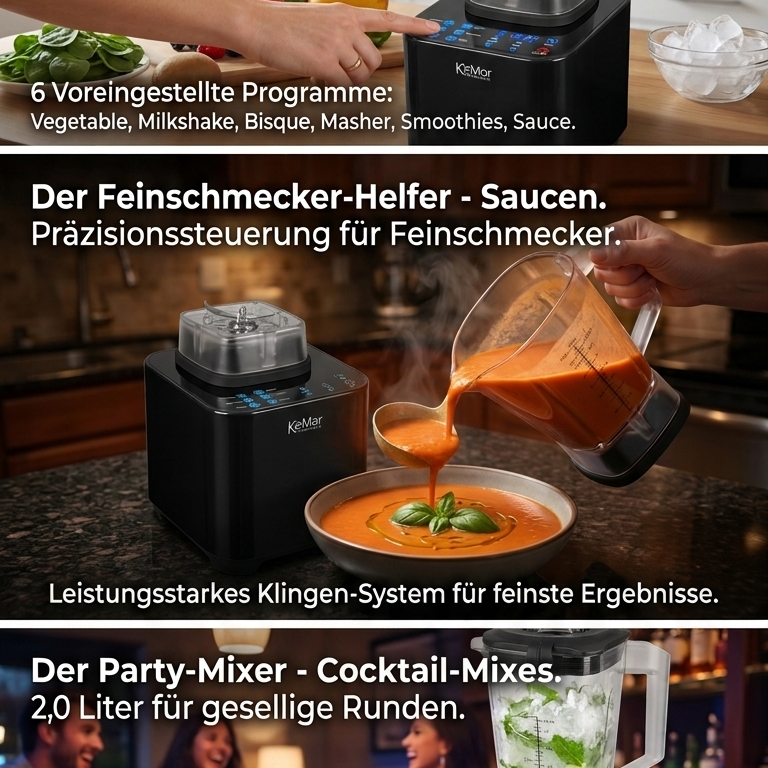
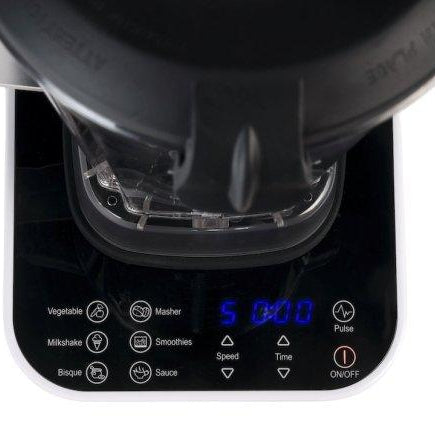
Yes! In the "Bisque" program or by extended high-speed blending, enough friction heat is generated to warm cold ingredients to serving temperature within minutes – without a stove.
What is the best way to clean the blender?
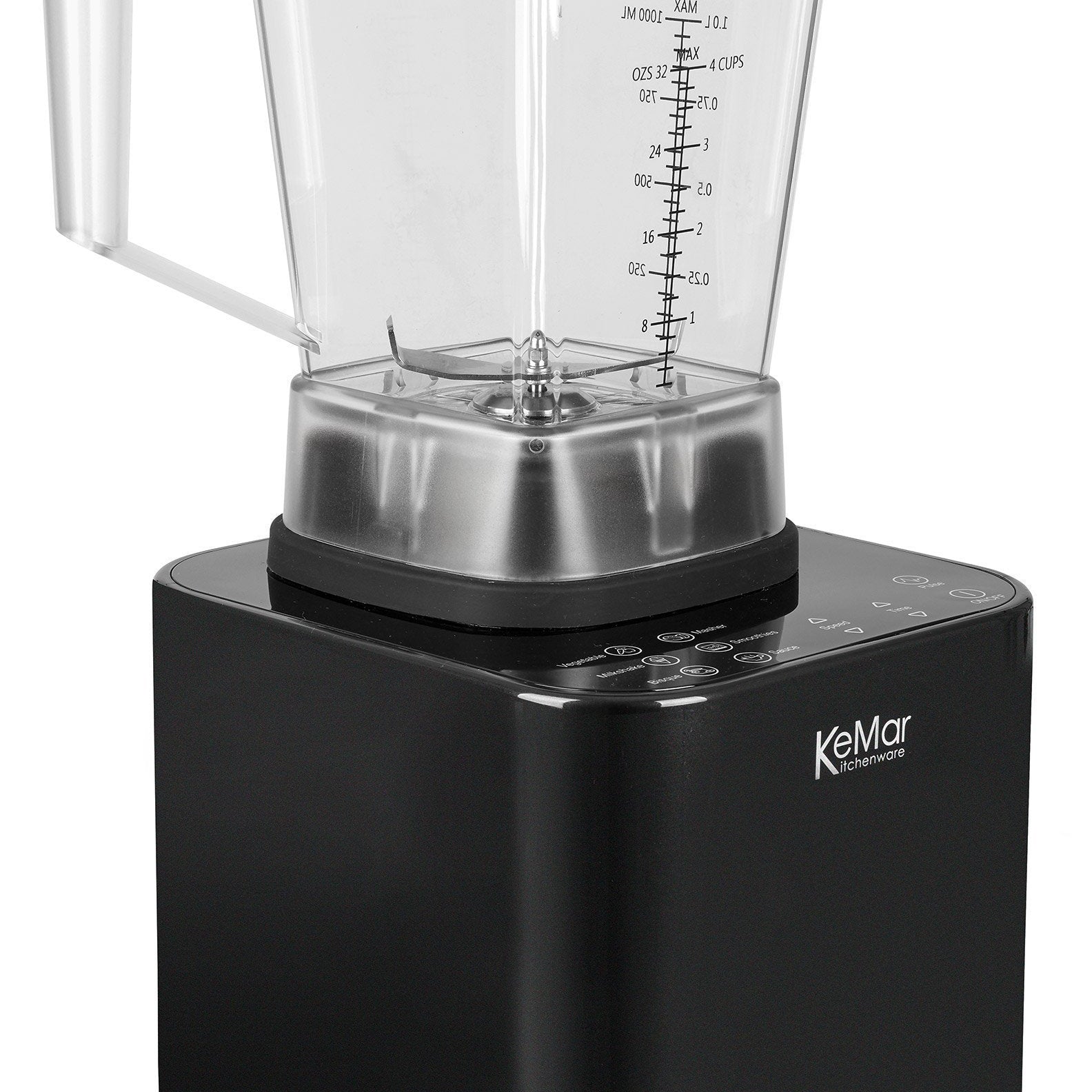
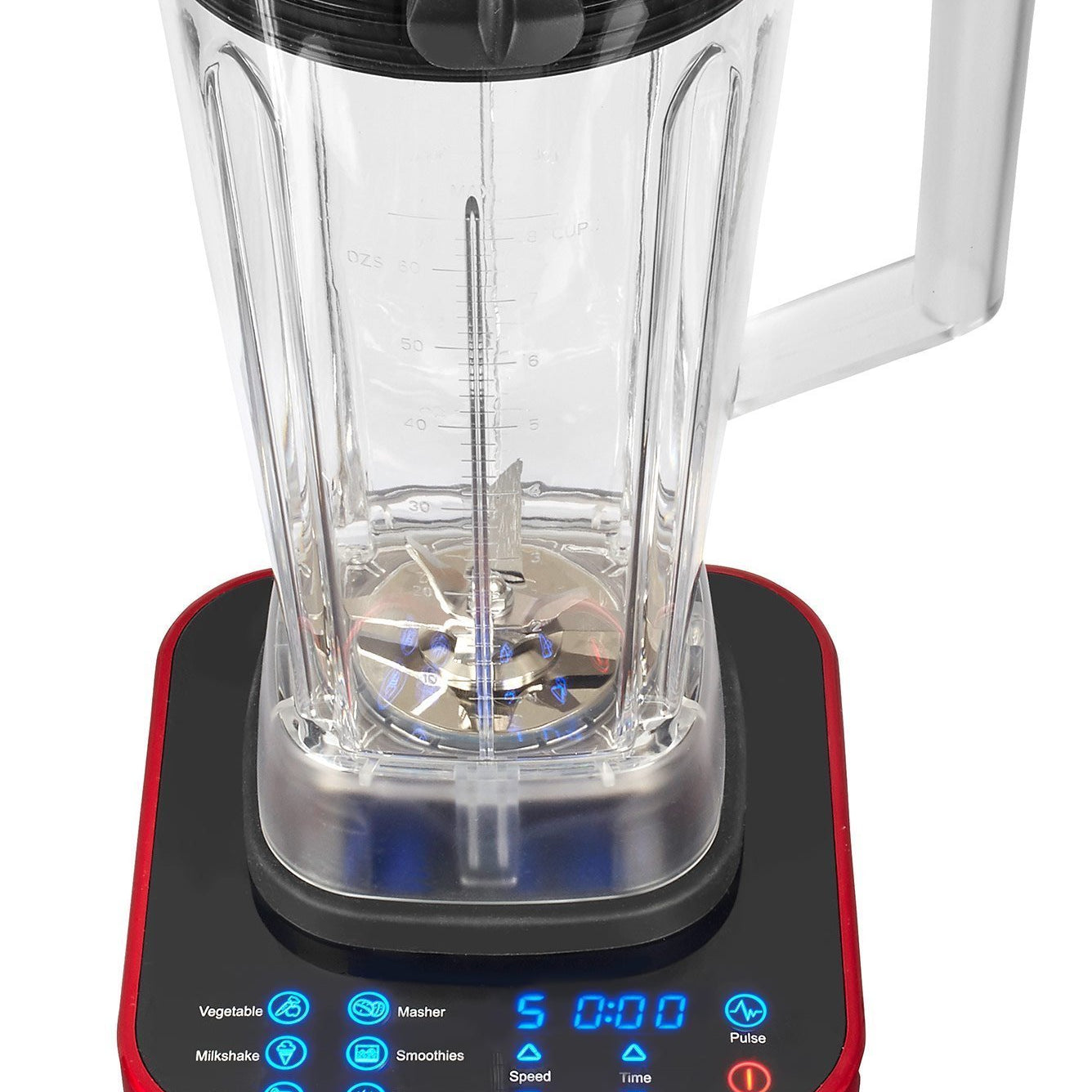
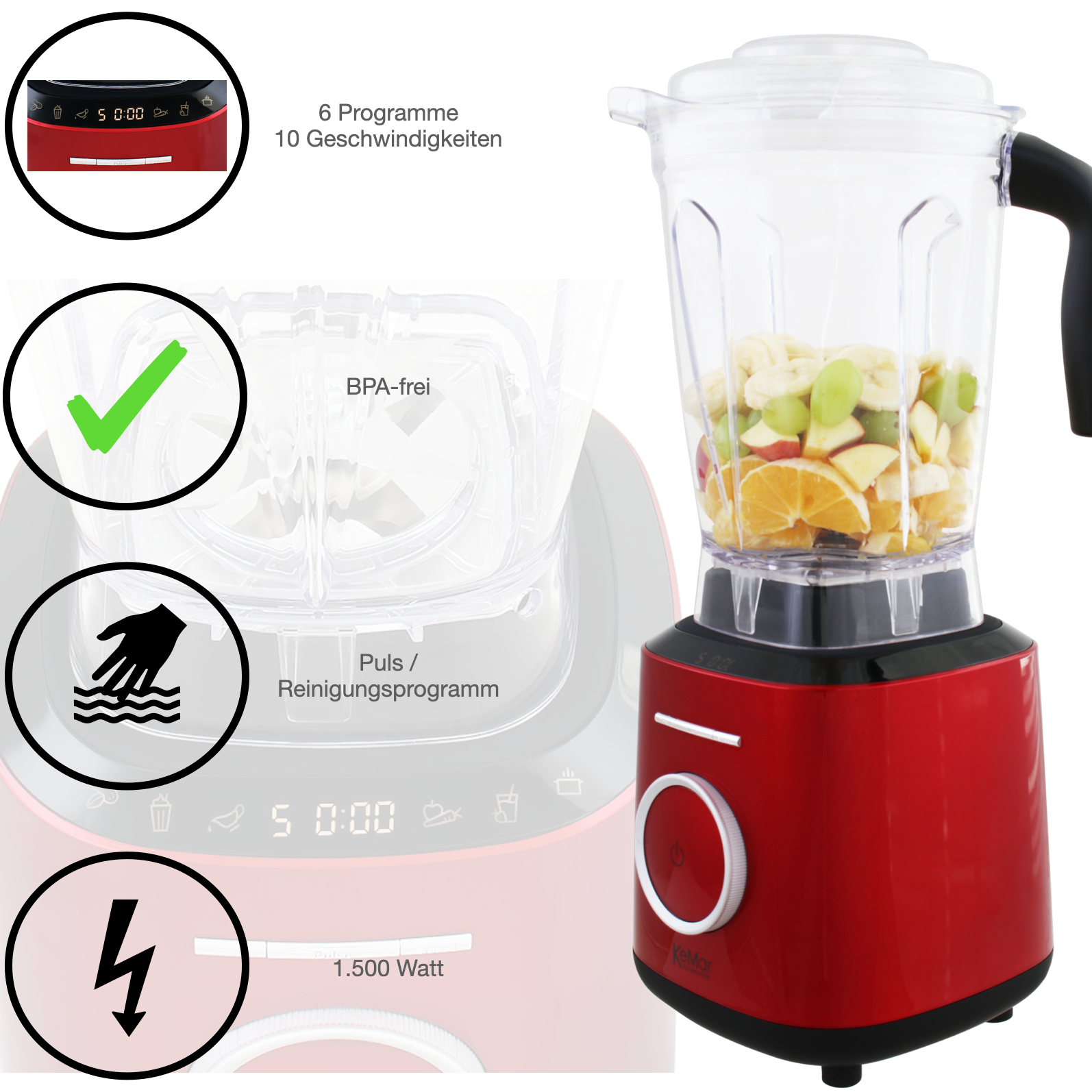
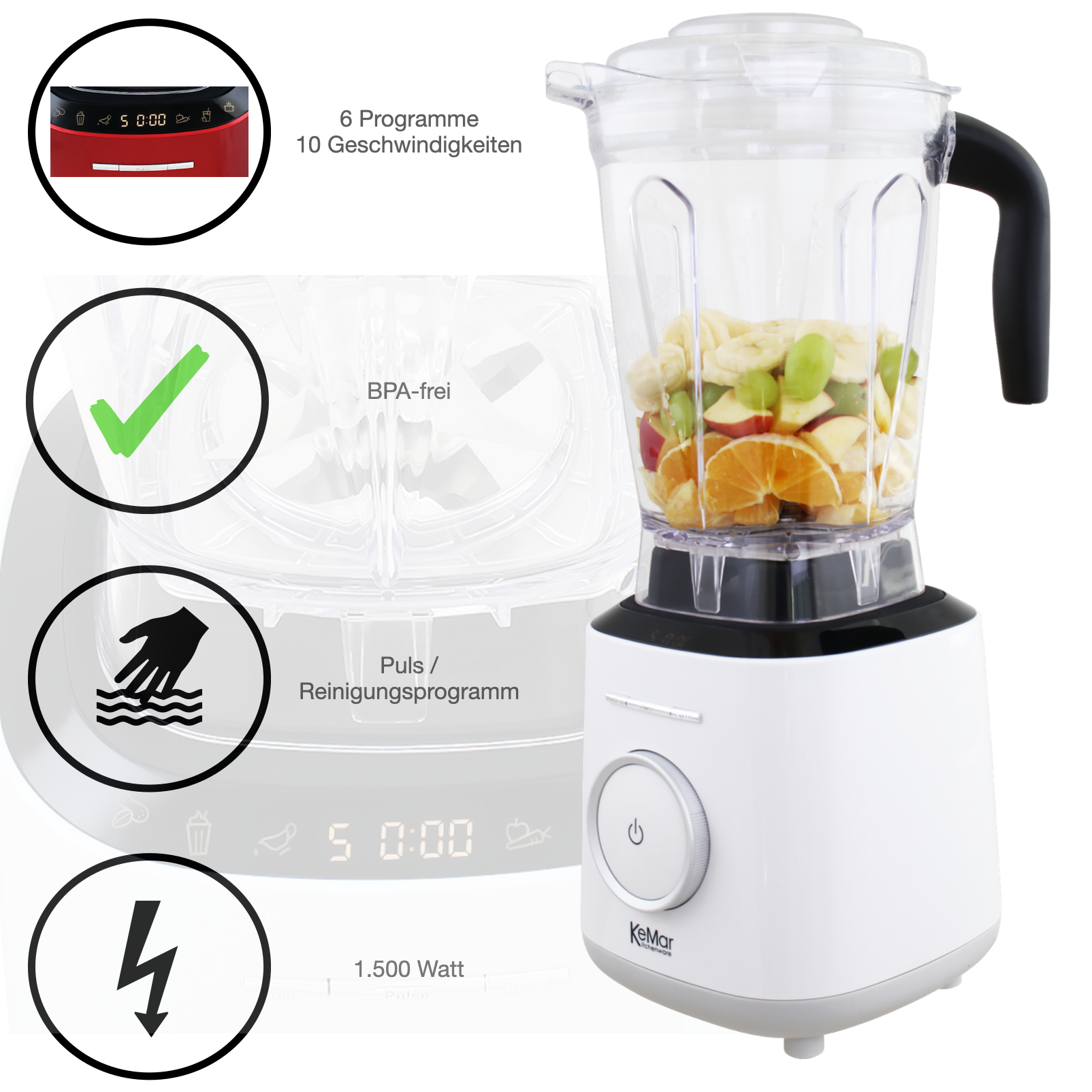
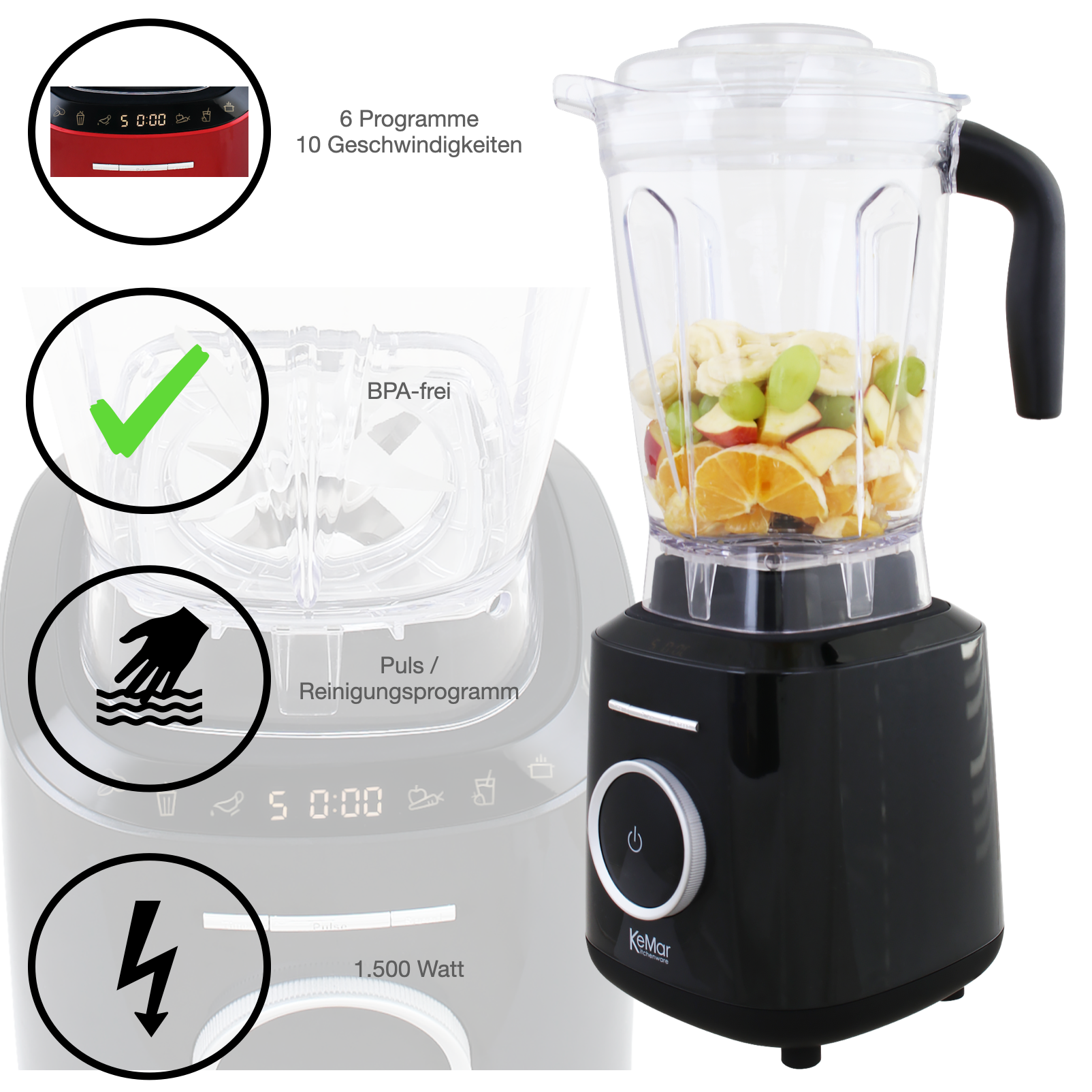
Thanks to the PULSE function, cleaning is a breeze. Add warm water and a drop of dish soap to the container and briefly press the pulse button. The blender cleans itself; then just rinse it out.
Why is the blending container made of TRITAN® plastic and not glass?
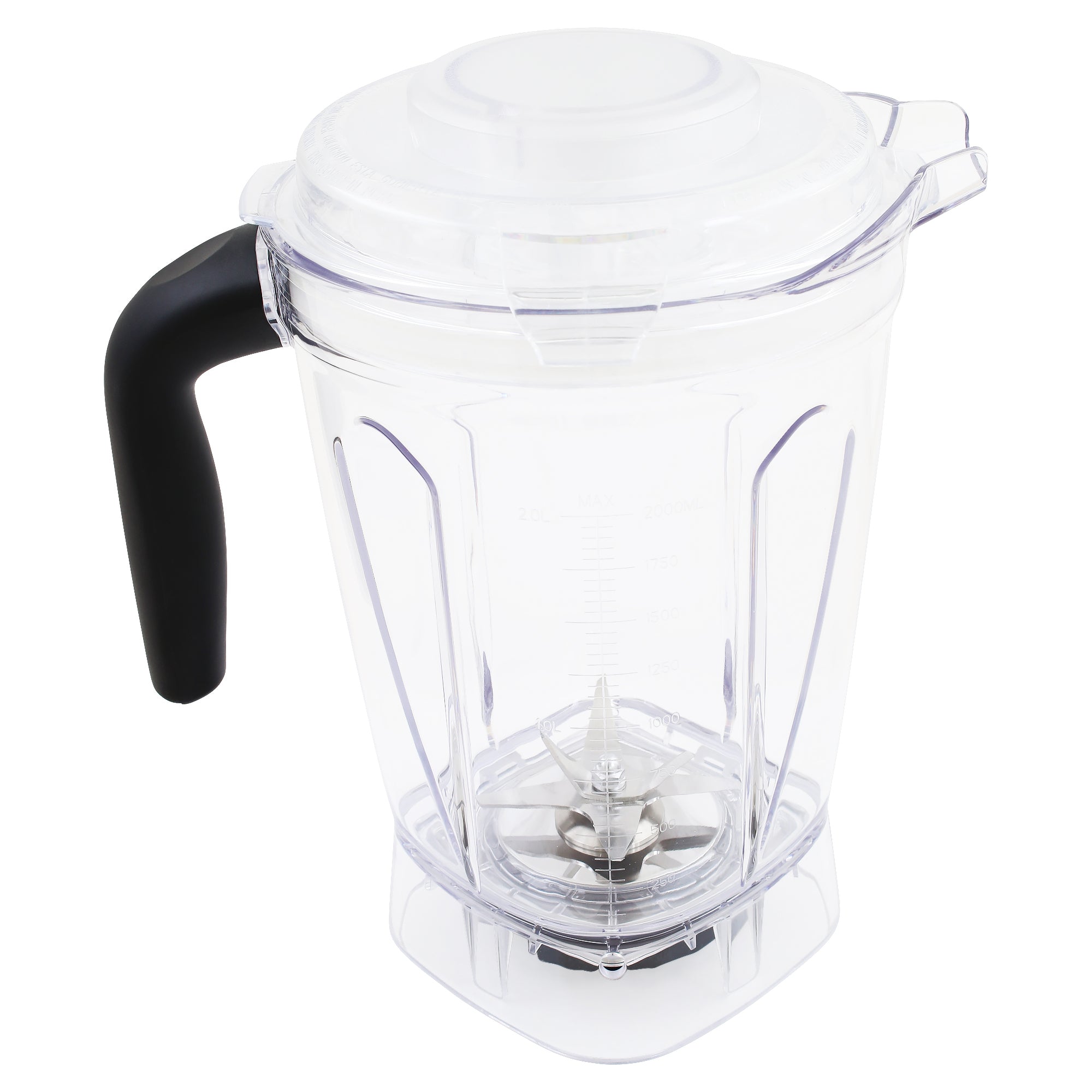
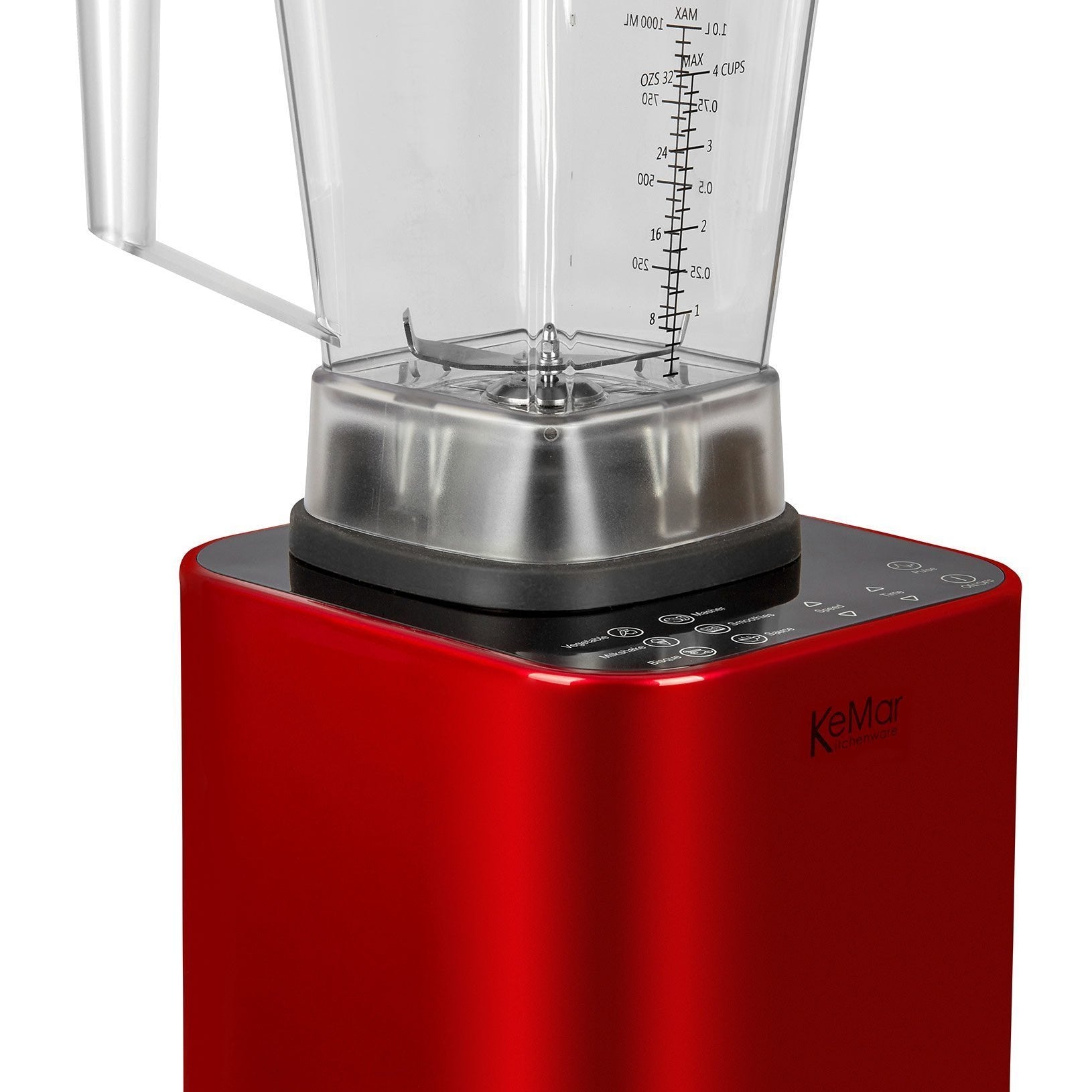
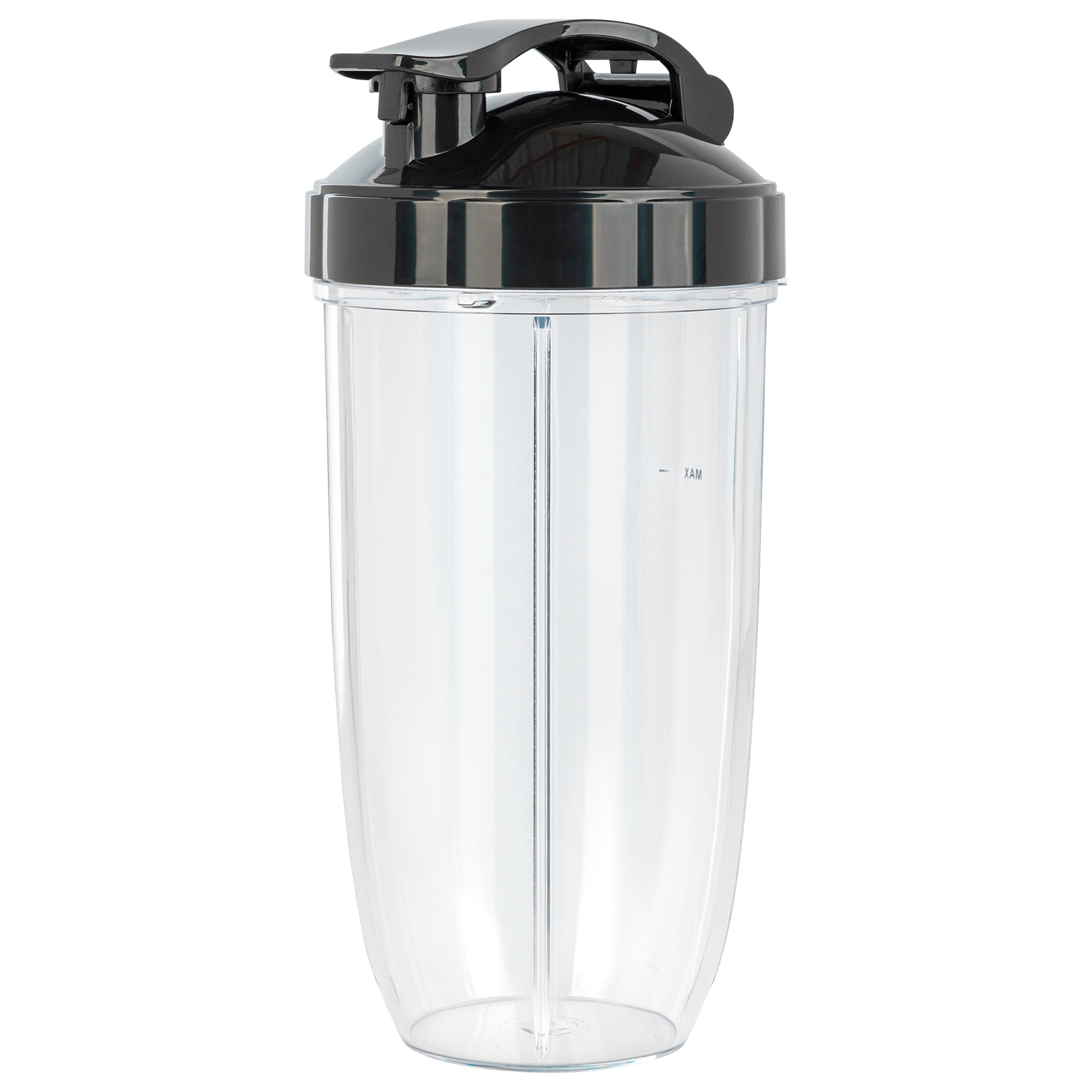
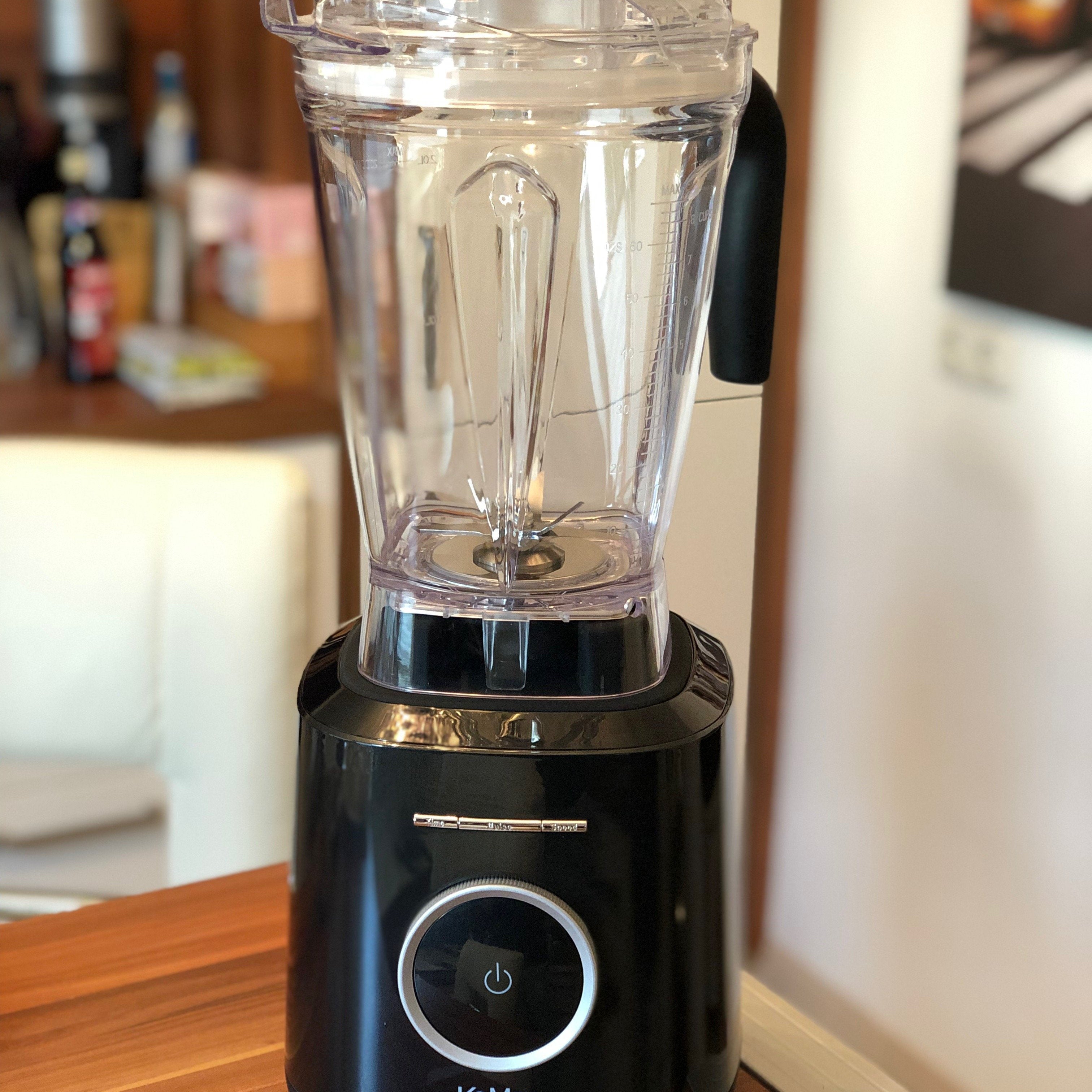
High-performance blender containers are typically made of TRITAN® plastic. Compared to glass, TRITAN® is food-safe, shatterproof, impact-resistant, heat-resistant up to 140°C, and very lightweight.
High-performance blenders are generally supplied with containers made of hard plastic, as these achieve significantly higher speeds than a conventional blender with a glass container. The hard plastic of the Tritan container has significantly higher elasticity and therefore compensates for the forces acting on the surface at speeds up to 30,000 rpm. If the container were made of glass, the glass would shatter with harder blending ingredients, as it could not compensate for the forces occurring during high-speed blending.
With their hard surface, nuts, beans, and grains can leave so-called micro-scratches in the plastic, which can make the blending container appear cloudy over time. With the following cleaning instructions, wear and tear will be kept to a minimum, but can never be completely avoided.
HOW DO I CLEAN THE TRITAN® BLENDING CONTAINERS?
The substances and minerals contained in various foods can leave a film of dirt on the inside of the blending container after repeated use. The containers may discolor or become milky and cloudy.
We therefore recommend cleaning the TRITAN®blending containers at regular intervals.
- If you primarily process carotenoid-rich foods such as carrots, bell peppers, or tomato paste, or have used strongly coloring spices such as turmeric, wiping out the container with a little cooking oil is usually sufficient.
- When grinding grains, beans, rice, sugar, nuts, and legumes, the container permanently becomes milky. Some green vegetables, spices, and protein powders can also cause this milky appearance. This is purely cosmetic and does not affect the function of the container – please note that the resulting cosmetic changes are not covered by the warranty.
There are various methods to remove discoloration from the blending container:
- Fill the blending container halfway with warm water and add three tablespoons of vinegar essence to the container. For an even better effect, you can also add a teaspoon of baking soda. Let the mixture sit for approximately 2-3 hours. Then rinse thoroughly with water.
- You can fill the blending container halfway with warm water and add baking powder. Let the baking powder sit for about an hour, then rinse thoroughly with clear water.
- Alternatively, you can fill the blending container halfway with warm water and add two to three denture cleaning tablets. Let the denture cleaner sit for about an hour, then rinse thoroughly with clear water.
- An environmentally friendly cleaning can be achieved with the juice of a lemon and two to three tablespoons of baking powder or baking soda. Fill the container halfway with warm water and add the ingredients. Let the blender run for about 10 seconds in PULSE mode. Then empty the container and clean the interior walls with a non-abrasive soft sponge. Then rinse the container thoroughly with water.
- Alternatively, you can simply place the container with some lemon juice outside in the sun; after a few hours, the sun, together with the citric acid, will have bleached out the deposits.
ARE THE CONTAINERS DISHWASHER SAFE?
Please do not cleanthe TRITAN® blending containers in the dishwasher, as the blades cannot be removed from the blending container and the cleaning salts and rinse aid can damage the TRITAN® containers.
The blade insert would suffer in the dishwasher, as the blades are very sensitive to acidic foods and salty dishwasher detergents. They would be damaged over time.
In addition, flash rust, which can detach from other metal parts in the dishwasher, can accumulate on the blades and damage them. Therefore, carefully clean the blades after use with warm water and a mild dish soap.
The raw material TRITAN® is a modern, high-quality, and very durable material that can be cleaned well even at high temperatures up to 100°C. Only the mechanical properties deteriorate over time.
Cleaning in the dishwasher can cause stress cracks prematurely. Therefore, we recommend cleaning by hand and not in the dishwasher.
Dishwashing detergent and rinse aid cause a gradual degradation of the polymer, which is associated with a reduction in mechanical strength.
The use of harsh cleaning agents and especially rinse aid can significantly reduce the number of cleaning cycles, as unsuitable cleaning agents can severely impair the mechanical strength of the plastic. Overly concentrated cleaning agents or too high a concentration of alkalis can also cause cracks prematurely. Always use a gentle cleaning agent and clean the containers by hand under running water with a mild dish soap. In general, the cleaning agents should be suitable for TRITAN® to avoid premature stress cracks. Rinse the containers thoroughly with clear water.
WHY ARE THE BLADES NOT SHARP?
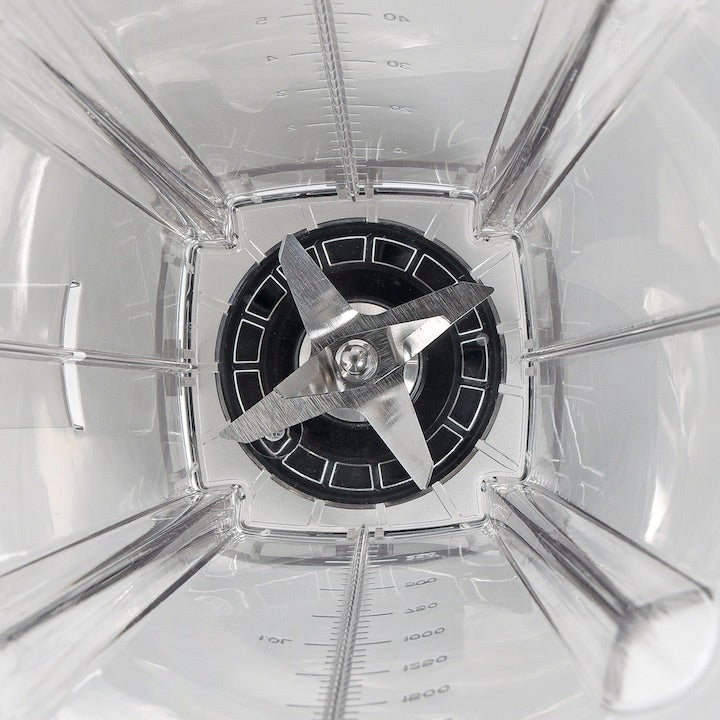
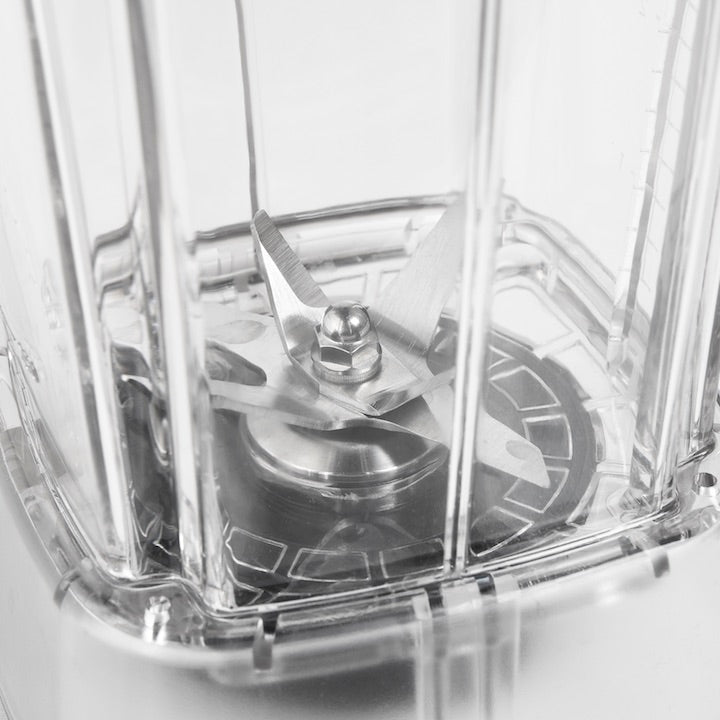
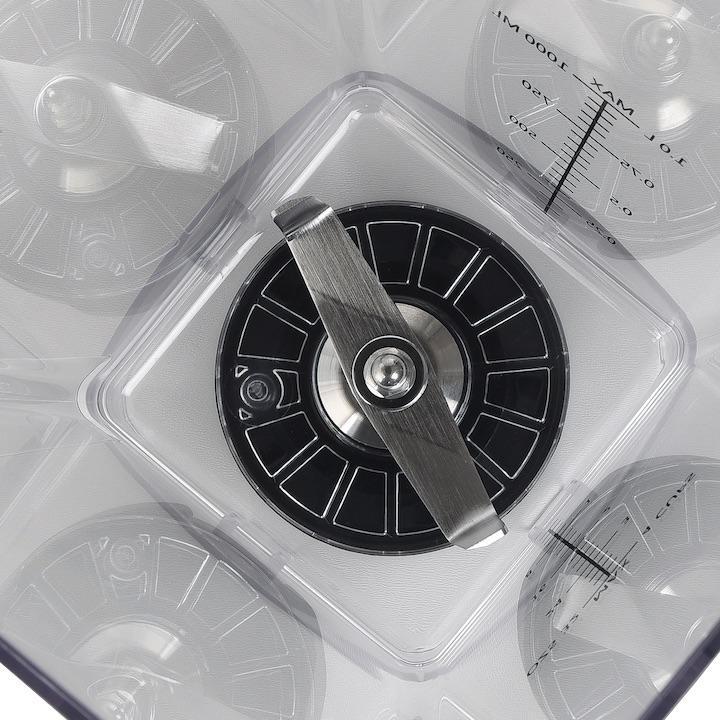
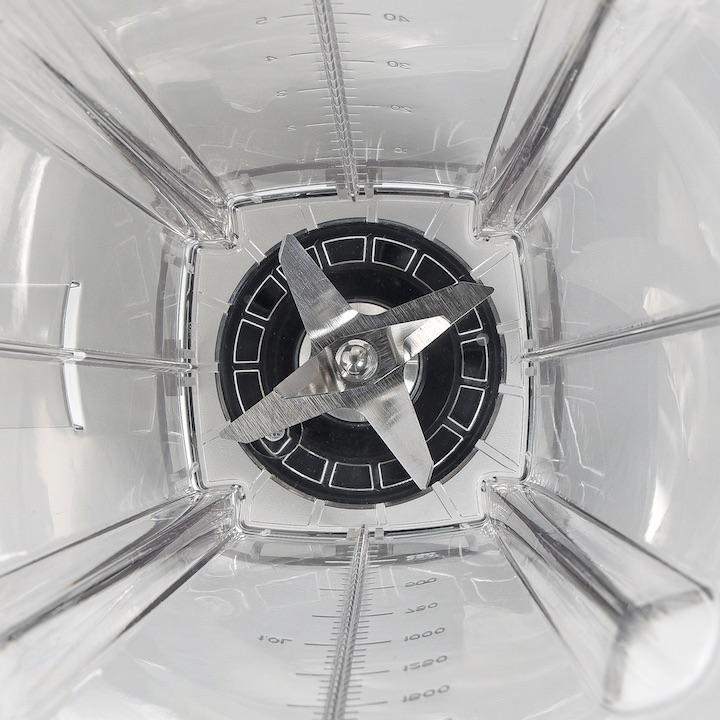
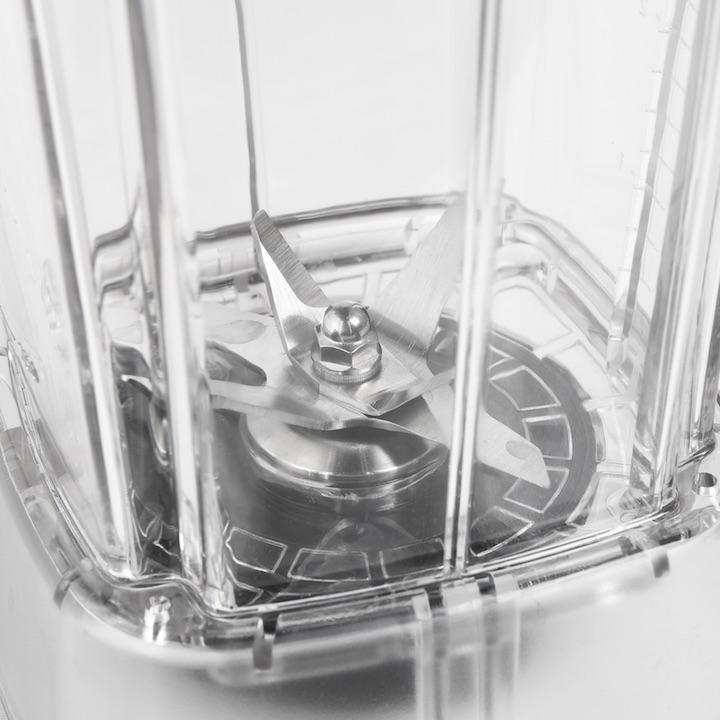
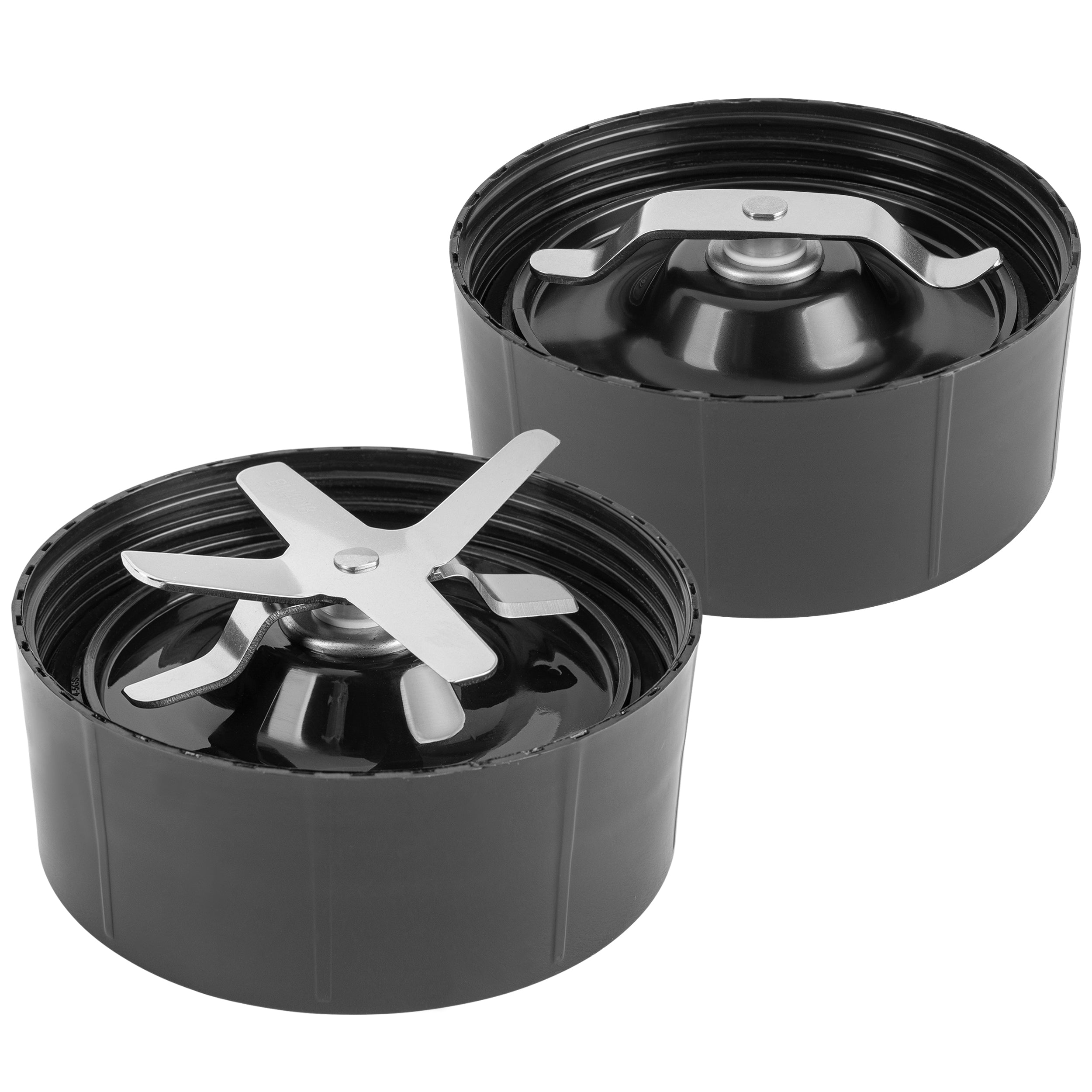
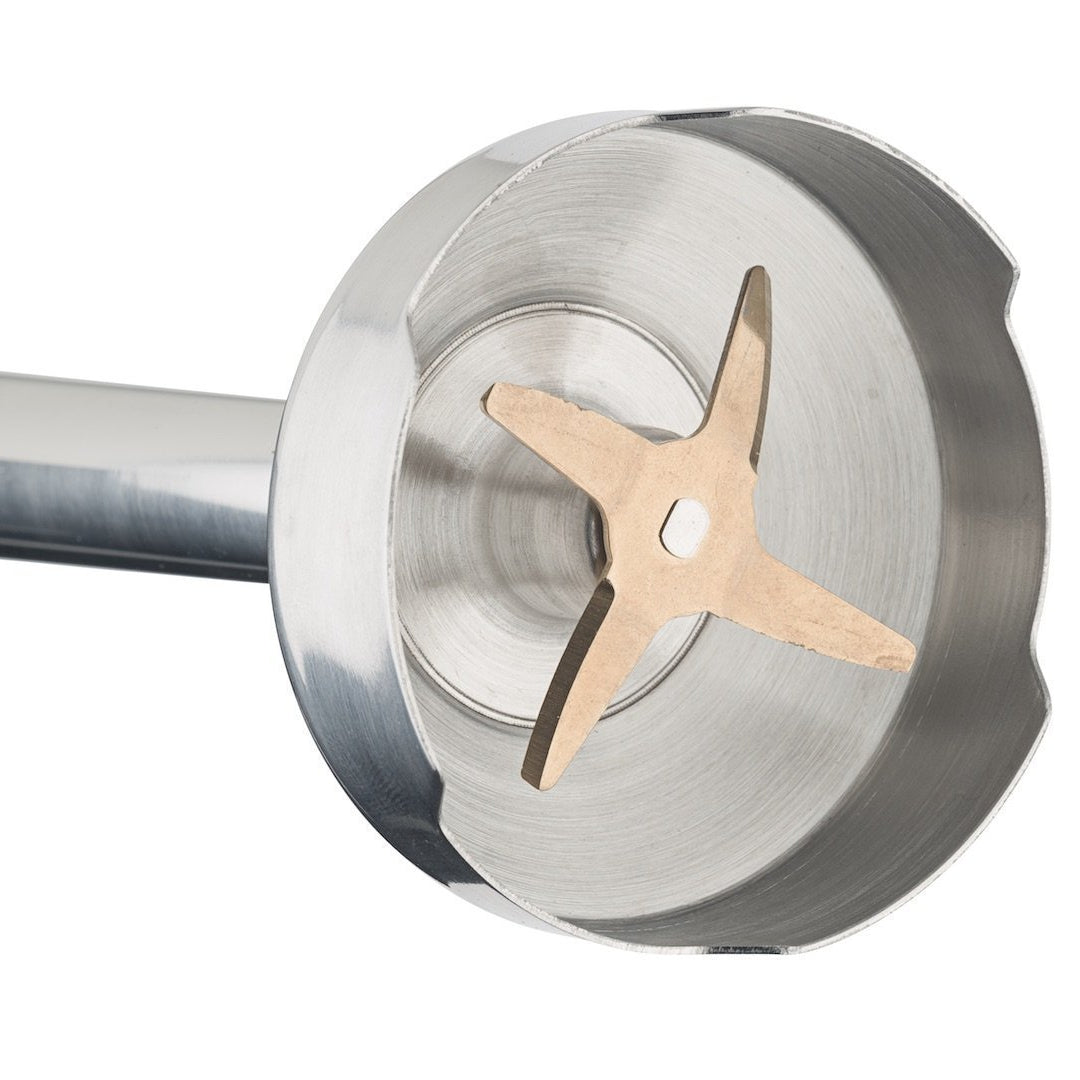
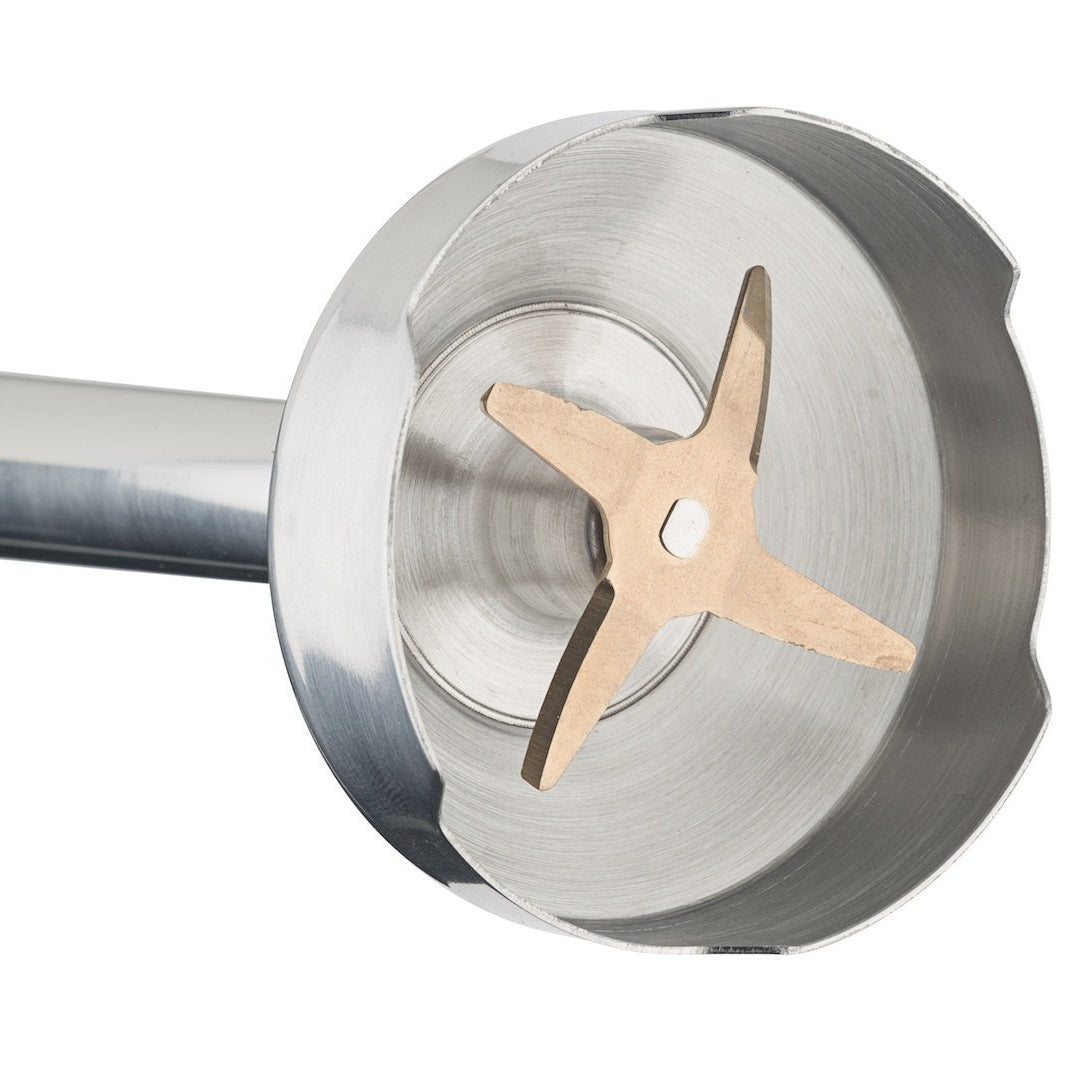
Without proper and functional blades, ingredients cannot be perfectly chopped. Therefore, both their sensible arrangement and good cutting quality are important – whereby the blade should be neither too sharp nor too dull. A seemingly dull blade is therefore not automatically a quality defect!
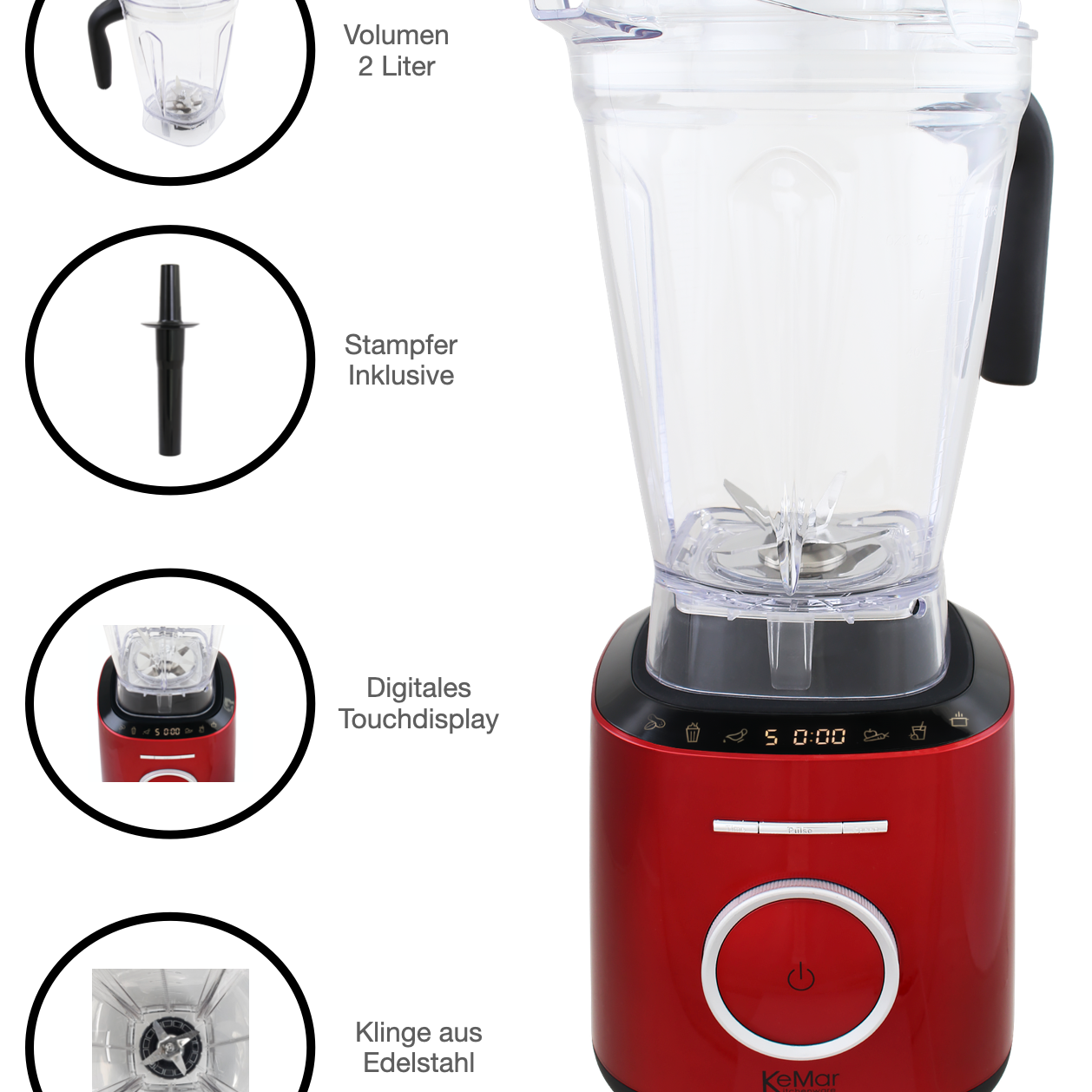
If you run your finger over the blades, you will notice that you don't cut yourself. This is because the blades of high-speed blenders have a blunt grind, meaning the blade grinds the respective blending material through high speed and not through sharpness.
As already mentioned above, sharpness is not the decisive criterion for blades in stand blenders. This is of course different for kitchen knives or normal blenders without high speed, but a high-speed blender is not intended to cut the blending material into small pieces, but to blend and "liquefy" it. Due to the high rotational speed of powerful blenders, relatively dull blades even provide better results because they offer a larger "impact surface" for the blending material. The blending material is not cut but liquefied into a paste by the impact speed.
WHAT MATERIAL IS USED FOR THE DRIVE SPINDLE AND THE BLENDING CONTAINER DRIVE?
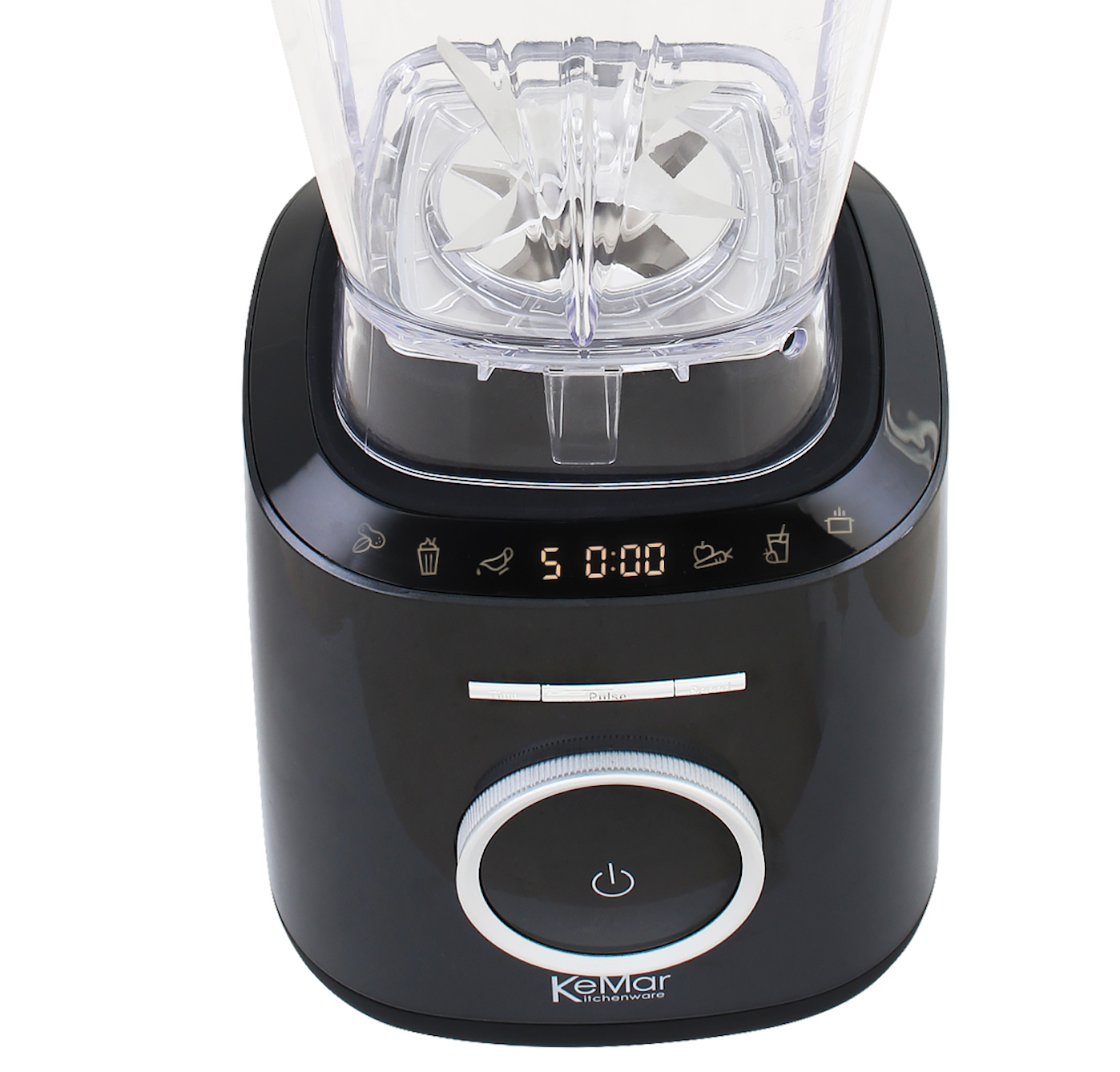
Since enormous forces act on the material in a high-performance blender, we use metal instead of plastic for the housing of the drive spindle and the drives of the blending containers. This guarantees increased longevity, as metal is less prone to wear than, for example, plastic.
WHY DO THE LIDS AND CONTAINERS SMELL AT FIRST?
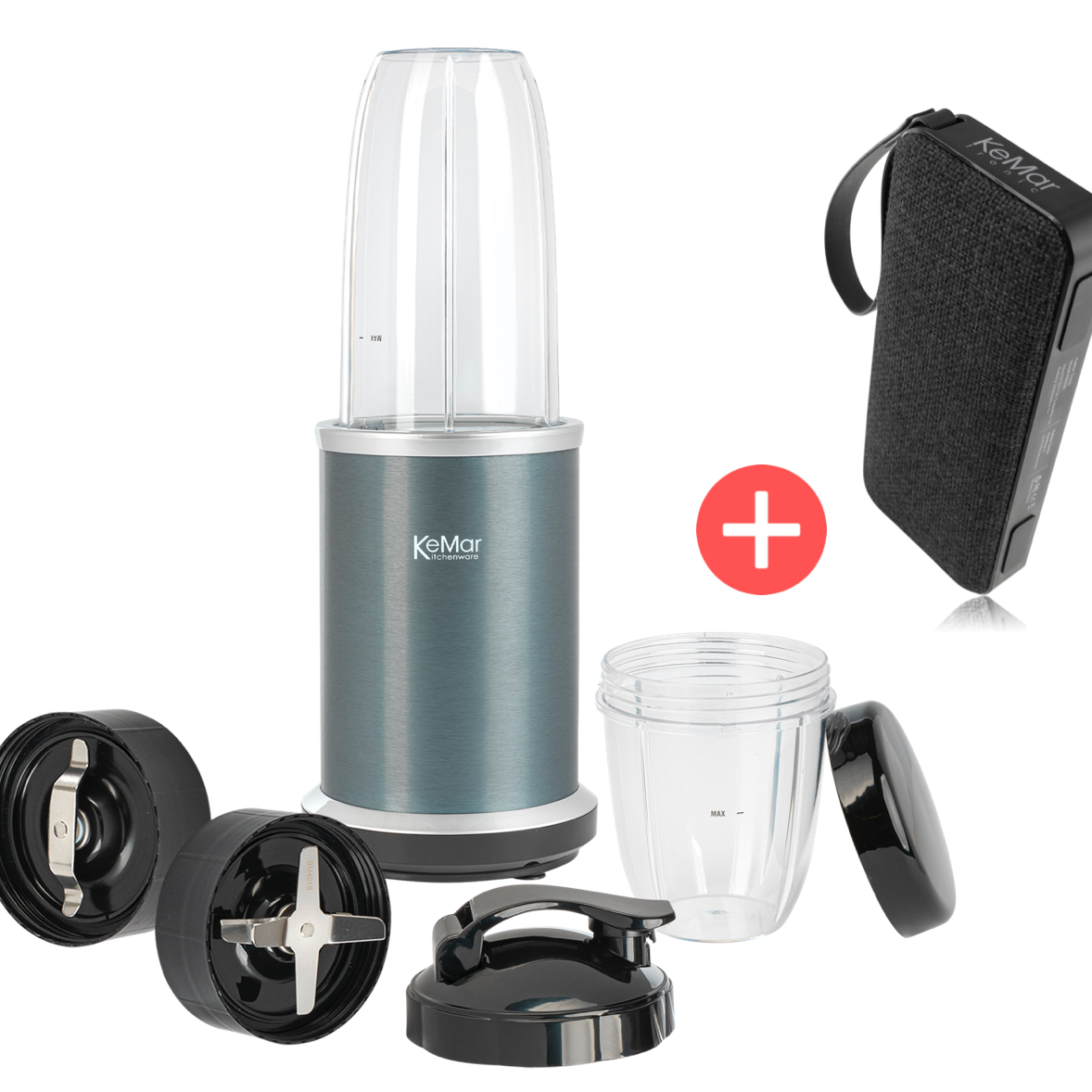
When you remove the containers and lids from the original packaging, you will notice a more or less strong "plastic smell." This comes from the styrofoam and plastic packaging of the KSB-200 / M.
Lids:
To remove the initial odors, you can also clean both lids in the dishwasher. However, it is usually sufficient to clean the lids with dish soap and warm water. At the latest, after you have used the containers and lids a few times, the smell will disappear by itself.
The lids (black) are made of TPE (Thermoplastic Elastomers), which do not contain plasticizers considered problematic, nor BPA, silicone, or latex. They are heavy metal and oil-free, discoloration-resistant, germ-reducing, and vegan.
Containers:
The containers are made of shatterproof, Bisphenol-A (BPA) free TRITAN®.
The colorless plastic TRITAN® is taste and odor-neutral and very stable. The material contains no plasticizers in the form of BPA (Bisphenol-A) and is very easy to clean.
WHY DOES THE MOTOR SMELL WHEN FIRST USED?
When the blender is first operated, you may notice an "electronic smell." This is caused by residues of the anti-corrosion resin layer between the carbon brushes and the electric motor winding.
For electric motors, it is necessary to apply an anti-corrosion layer to ensure trouble-free operation. Electric motors are exposed to various extreme environmental influences depending on their installation location and operating mode. For a high-performance blender, these include, for example, humidity and very high operating temperatures.
Good corrosion protection is crucial for the quality and lifespan of the electric motor.
All electrically conductive parts, e.g., the winding, are protected against corrosive influences by a resin layer due to the required electrical properties. The same applies to the electrical connection parts and terminals.
This measure prevents the formation of rust on the surface of iron-containing parts and protects them against the ingress of moisture and water.
During the first operations of the high-performance blender – especially under heavy load – very high operating temperatures occur at the winding and on the electric motor at around 30,000 rpm. Especially when the motor is new, there may still be residues of protective resin between the carbon brushes and the motor winding. The heat generated and the friction of the carbon brushes on the winding produce these odors perceptible as an "electronic smell." The smell diminishes over time as the protective layer on the carbon brushes gradually wears off with use. Depending on the thickness of the applied protective layer, this can take a longer time until the smell subsides and no longer occurs.